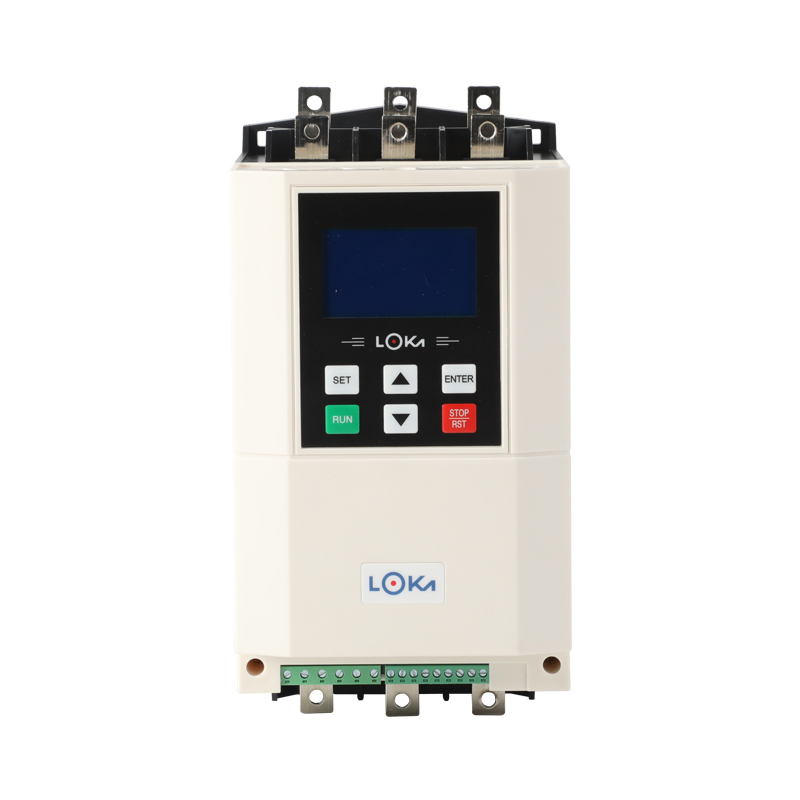
Selecting the right type of soft starter is a critical step to ensure smooth motor startup, extend equipment lifespan, and save energy. The following summarizes the key aspects to consider when selecting a right soft starter, based on industry-wide principles.
1.Core selection principles of soft starter
Match motor parameters: The rated current of the soft starter should always be greater than the rated operating current of the motor, and the rated voltage must be consistent with the power supply system, such as three-phase AC380V.
Load type differentiation: Select the trip class based on load characteristics to avoid overheating caused by excessively long start-up times, such as class 10 for light loads and class 30 for heavy loads. Additionally, based on experience, load types can also be determined by their start-up time. Loads that complete start-up within 10 seconds are generally considered normal loads, those taking 20 seconds are classified as heavy loads, and loads with longer start-up times are defined as extra-heavy loads.
Environmental condition adaptation: The usage of derating for soft starter is required in high-temperature, high-humidity and high-altitude environments. For example, when the ambient temperature exceeds 40 degrees, you need to refer to the derating curve to adjust the selection for soft starter.
2.Functional and safety considerations of soft starter
Built-in functions: Prioritize models with bypass contactors to reduce operational losses; overload scenarios require safety functions such as overload protection and short-circuit protection.
Communication and control: If an automated system integration is required, select a model that supports protocols such as Modbus and Ethernet, and confirm that the protection rating meets the on-site requirements.
3.Actual selection steps of soft starter
A, Determine the motor power, voltage, and load type to select the right soft starter.
B, Select the trip class and soft starter series based on load characteristics.
C, Check the impact of environmental factors on capacity such as temperature and altitude.
D, Verify functional requirements, such as communication and overload protection to check if they are matched.
Media Contact
Company Name: Zhejiang Loka Electric Co., Ltd.
Email: Send Email
Country: China
Website: https://www.cnloka.com/