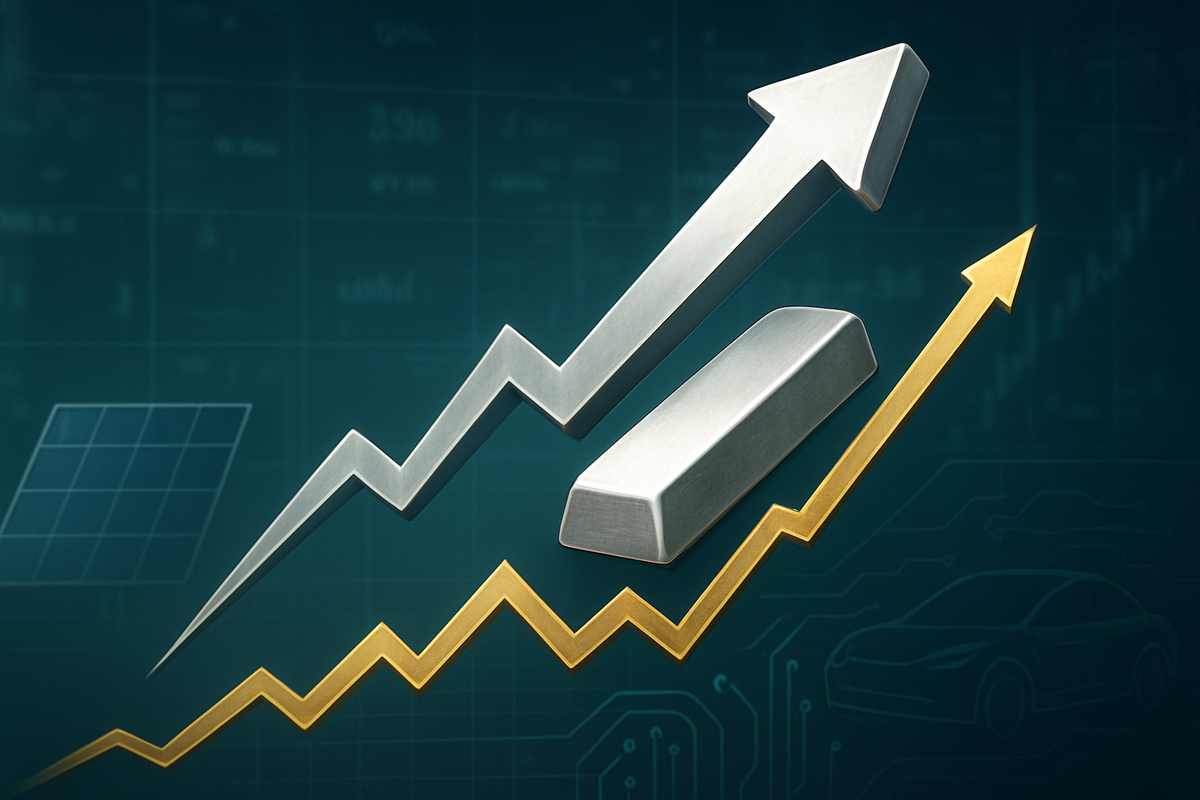
New York, NY – December 1, 2025 – The global financial markets are buzzing as silver has roared to unprecedented nominal all-time highs, with prices nearing an astonishing $58 per ounce. This monumental surge marks a historic moment for the precious metal, which has nearly doubled in value in 2025, significantly outperforming gold in percentage terms, even as gold itself has reached record-breaking prices. While silver's absolute price has not surpassed that of its yellow counterpart, its meteoric rise and the shrinking gold-silver ratio are signaling a profound shift in investor sentiment and industrial demand.
This remarkable rally is unfolding against a backdrop of intense market volatility, driven by a confluence of anticipated monetary policy shifts, persistent supply constraints, and burgeoning industrial applications. The dramatic ascent of silver is prompting analysts and investors alike to re-evaluate the future trajectory of both precious metals and the broader implications for the global economy.
Silver's Historic Ascent: A Detailed Account of the Rally
Silver's journey to its current all-time high has been a dramatic one, characterized by several key milestones throughout late 2025. The metal first breached its 45-year-old nominal record of US$49.95 (set in 1980) on October 9, 2025, climbing to US$51.14 per ounce. The momentum continued unabated, with prices reaching $54.08 by October 17, 2025, and further extending to US$56.86 on November 28, 2025. Most recently, on December 1, 2025, silver pushed past $57.86 per ounce, with some reports indicating trades near $58.00. This represents an almost 100% increase from its 52-week low near $28.30 earlier in the year.
The driving forces behind this unparalleled surge are multifaceted. A primary catalyst is the widespread expectation of interest rate cuts by the US Federal Reserve, with markets pricing in an 85-88% probability of a December 2025 cut. Lower interest rates typically enhance the appeal of non-yielding assets like precious metals. Simultaneously, robust investment demand is evident, with significant inflows into silver-backed Exchange Traded Funds (ETFs). The market is also grappling with severe supply constraints; Chinese inventories have plummeted to nearly decade lows, and record silver exports from China to London in October have fueled concerns of a supply squeeze in other major hubs.
Beyond its traditional role as a monetary asset, silver's burgeoning industrial demand is playing a pivotal role. The metal is a critical component in the rapidly expanding sectors of electric vehicles (EVs), solar panels, 5G technology, data centers, and smartphones, particularly amidst an accelerating AI boom. Geopolitical tensions and persistent economic uncertainties further bolster silver's safe-haven appeal, while a weaker US dollar makes dollar-denominated commodities more attractive to international buyers. The rally has not been without its turbulence, including a chaotic, hours-long halt in futures trading on the CME's Comex Exchange on November 28, 2025, which contributed to heightened volatility and sharp price movements.
Companies on the Cusp: Winners and Losers in the Silver Rush
The unprecedented surge in silver prices is poised to create significant winners and losers across various industries. Mining companies with substantial silver operations are undoubtedly at the forefront of the beneficiaries.
Major silver producers such as Pan American Silver Corp. (NASDAQ: PAAS), Hecla Mining Company (NYSE: HL), and First Majestic Silver Corp. (NYSE: AG) are likely to see substantial boosts to their revenues and profitability. Higher silver prices directly translate to increased margins, enabling these companies to potentially expand operations, invest in new projects, or return capital to shareholders. Investors in these companies have already seen considerable gains, and continued upward momentum in silver could further fuel their stock performance. Similarly, diversified miners like BHP Group (NYSE: BHP) or Rio Tinto (NYSE: RIO), which have silver as a byproduct of other metal mining (e.g., copper, lead, zinc), could also see an uplift in their overall financial health.
Conversely, industries heavily reliant on silver as an industrial input may face increased cost pressures. Manufacturers of solar panels, electric vehicles, and electronic components, including companies like First Solar, Inc. (NASDAQ: FSLR) or various automotive manufacturers, could see their raw material costs rise significantly. While some of these costs might be absorbed or passed on to consumers, a sustained high price for silver could impact their profit margins or necessitate a search for alternative, less efficient, or more costly materials. Jewelers and silverware manufacturers might also experience reduced demand due to higher consumer prices for silver products. Companies in the photographic industry, though smaller users of silver now, would also face higher input costs.
Furthermore, companies involved in silver hedging strategies might experience both opportunities and risks. Those with well-executed hedges could mitigate some of the price volatility, while others with unfavorable positions could face losses. The increased interest in silver could also benefit financial institutions and brokers specializing in precious metals trading and investment products, such as Sprott Inc. (NYSE: SII), which manages various precious metal funds.
Wider Significance: A Paradigm Shift in Precious Metals
Silver's dramatic ascent and its outperformance of gold in percentage terms signal a potential paradigm shift in the precious metals market, moving beyond its traditional role as merely "poor man's gold." This event fits into broader industry trends emphasizing industrial demand for critical minerals and the re-evaluation of assets in an inflationary or uncertain economic environment.
The significant decline in the gold-silver ratio, which measures how many ounces of silver are needed to buy one ounce of gold (falling from over 100 in January 2025 to 75 by the end of November 2025), highlights silver's strengthening relative value. This trend could indicate a broader market recognition of silver's dual utility as both a monetary metal and an indispensable industrial commodity. The ripple effects could extend to other industrial metals, potentially drawing more investment into the broader commodities sector as investors seek assets with tangible utility and limited supply.
Regulatory bodies might also pay closer attention to the silver market, particularly following the erratic trading conditions and the CME Comex halt. This could lead to discussions about market transparency, liquidity regulations, and measures to prevent excessive speculation or potential market manipulation, echoing historical precedents like the Hunt brothers' attempt to corner the silver market in 1980. Historically, periods of high inflation or economic uncertainty have often seen a flight to precious metals, but silver's current surge is uniquely amplified by its critical role in the green energy transition and advanced technologies. This distinguishes the current rally from past spikes, suggesting a more fundamental and sustainable demand driver.
What Comes Next: Navigating the Future of Precious Metals
The immediate future for silver is likely to remain volatile, with analysts noting extreme momentum indicators that could signal potential for short-term pullbacks. However, the underlying fundamental drivers – anticipated interest rate cuts, robust industrial demand, and persistent supply tightness – suggest a strong bullish bias for the long term. In the short term, investors will closely watch upcoming Federal Reserve announcements and any shifts in global economic sentiment. Continued strong industrial data from the EV, solar, and technology sectors will also be crucial.
For market participants, potential strategic pivots may involve re-allocating portfolios to increase exposure to silver or silver mining companies, especially for those seeking higher growth potential than traditional gold investments. Companies reliant on silver as an input may need to explore long-term supply contracts or investigate material substitutions, although viable alternatives for many of silver's unique properties are scarce. Market opportunities may emerge in exploration and development of new silver deposits, as higher prices make previously uneconomical projects viable. Challenges include managing price volatility, potential regulatory scrutiny, and ensuring stable supply chains in a tight market.
Looking ahead, several scenarios could unfold. A continued dovish stance from central banks, coupled with accelerated adoption of green technologies, could push silver prices even higher, potentially narrowing the gold-silver ratio further. Conversely, an unexpected hawkish turn by the Fed or a significant slowdown in industrial growth could temper the rally. Another scenario involves increased investment in recycling technologies to recover silver from electronic waste, which could partially alleviate supply constraints in the long run. The dynamic interplay between monetary policy, industrial innovation, and geopolitical stability will ultimately dictate the trajectory of both silver and gold.
Wrap-Up: A New Era for the White Metal
Silver's monumental achievement of reaching nominal all-time highs in late 2025 marks a pivotal moment in the financial markets. While it has not surpassed gold in absolute price, its nearly 100% year-to-date percentage gain has dramatically outpaced gold's 60% rise, underscoring a significant shift in its perceived value and utility. Key takeaways from this event include the powerful influence of anticipated interest rate cuts, the critical and growing role of industrial demand in sectors like EVs and solar, and the persistent challenges of supply constraints.
Moving forward, the market will likely continue to be captivated by silver's performance. Its dual identity as both a safe-haven asset and an essential industrial metal positions it uniquely in the current economic landscape. Investors should watch for further developments in central bank policies, global industrial growth trends, and any potential regulatory responses to market volatility. The shrinking gold-silver ratio suggests a potential re-rating of silver's intrinsic value, hinting at a new era where the "white metal" commands greater attention and investment. The lasting impact of this rally could be a fundamental re-evaluation of silver's role in diversified portfolios and its strategic importance in the global economy.
This content is intended for informational purposes only and is not financial advice