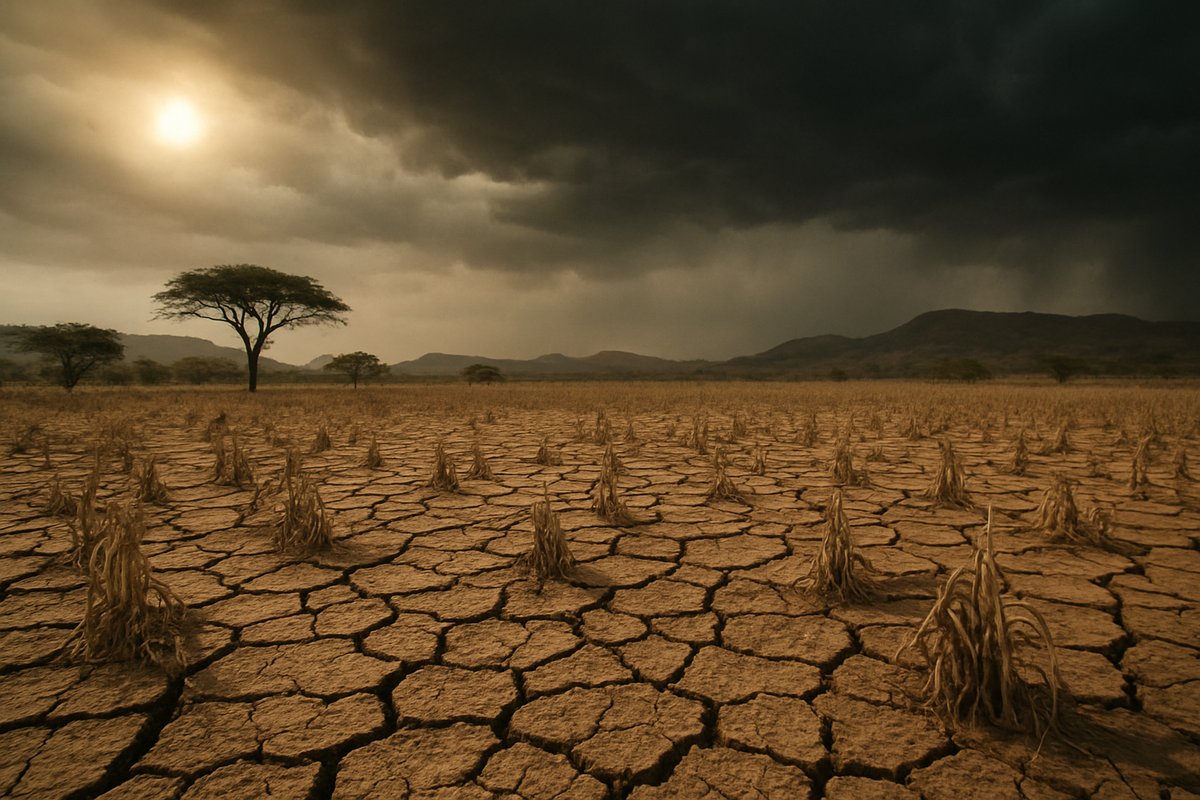
The world is currently grappling with a potent and dangerous cocktail of climate change impacts and water scarcity, giving rise to a phenomenon dubbed "climateflation." This escalating crisis is driving up global food commodity prices and, critically, pushing millions in Africa to the brink of severe food insecurity, threatening financial stability and geopolitical order. The immediate picture reveals a landscape where extreme weather events and persistent water shortages are directly disrupting agricultural production worldwide, triggering sharp rises in food prices across numerous countries and sending ripple effects through global supply chains.
Climate's Grip on the Global Larder: A Detailed Timeline of Disruption
The period between 2022 and 2025 has seen a significant increase in the frequency and intensity of extreme weather events, directly impacting agricultural production and, consequently, food prices worldwide. These events include prolonged droughts, severe heatwaves, and devastating floods, which damage crops, reduce yields, and disrupt food supply chains. Water scarcity, intensified by climate change, further exacerbates these issues, as agriculture is the largest consumer of freshwater globally. When water resources become insufficient, crop yields diminish, livestock productivity falls, and processing costs rise, all contributing to higher food prices. The effects of climateflation are not uniform, often hitting fresh fruits and vegetables the hardest. Studies indicate that a 1°C rise in monthly temperatures can drive food price inflation, with the effect lasting for at least 12 months, and this impact is more pronounced in hotter regions.
Timeline of Events (2022-2025):
- 2022: The Horn of Africa faced one of its worst droughts in decades, impacting over 31 million people across Ethiopia, Kenya, and Somalia, causing food prices in Ethiopia to rise by 40%. Europe experienced one of its most damaging summers in 500 years due to severe drought and heatwaves, leading to significant agricultural losses and food inflation soaring by as much as 19% in some parts. An unprecedented drought in the United States, particularly California and Arizona, severely affected vegetable production, leading to an 80% increase in U.S. vegetable prices by November. Floods in Australia contributed to a staggering 300% rise in lettuce prices. Global food prices soared to record highs, driven by extreme weather, geopolitical conflicts, and high input costs.
- 2023: The severe drought continued in the Horn of Africa, with over 23 million people facing severe hunger. Brazil experienced a significant drought impacting coffee crops, leading to a 55% increase in global coffee prices by August 2024. Another historic drought across Southern Europe, notably in Spain, caused olive oil prices across the EU to jump by 50%. A drought in Mexico resulted in a 20% increase in fruit and vegetable prices by early 2024.
- 2024: A heatwave in February in West Africa (Ivory Coast and Ghana), following a prolonged drought, caused global cocoa prices to spike by an unprecedented 280-300% by April. Record-breaking temperatures in Asia (South Korea, Japan, China, India) led to significant price shifts: Korean cabbage prices spiked by 70%, Japanese rice by 48%, and Chinese vegetable prices surged by 30%. A May heatwave in India saw onion and potato prices increase by 89% and 81% respectively. Heat and drought in Vietnam and Brazil further damaged coffee crops. Corn prices in South Africa rose by 36% in April after a March heatwave.
- 2025 (Forecasts and Ongoing Impacts): The situation in the Horn of Africa is expected to worsen through December, with below-normal rainfall predicted. Around 6.5 million people face high levels of hunger, including 2.5 million children. Overall, Africa faces its most severe hunger crisis in decades, with over 282 million people affected by July. Global food prices are forecast to continue increasing, with the European Central Bank projecting a 1% to 3% annual rise in food prices in Europe by 2035 due to climate impacts.
Key Players and Stakeholders:
- Specific Regions and Countries: The Horn of Africa (Ethiopia, Kenya, Somalia), Southern Africa, West Africa (Ghana, Ivory Coast, Niger), North America (California, Arizona, US Midwest), South America (Brazil), Europe (Spain, UK), Asia (China, India, Japan, South Korea, Vietnam), and Oceania (Australia) are all experiencing direct impacts.
- International Organizations: The Food and Agriculture Organization (FAO), World Food Programme (WFP), International Fund for Agricultural Development (IFAD), UNICEF, World Bank, and International Monetary Fund (IMF) are actively involved in monitoring, responding to, and researching the crisis. The European Central Bank (ECB) is also studying climateflation's impact on monetary policy.
- Agricultural Sectors: Grains (wheat, maize, rice), oilseeds, horticulture (fresh fruits and vegetables), cash crops (coffee, cocoa), and livestock are all severely affected.
- Governments: National governments are grappling with policy responses, including potential export/import restrictions, and developing strategies for sustainable agriculture and climate adaptation.
Initial Market Reactions: Market reactions have been swift and pronounced, characterized by sharp price spikes and increased volatility in commodity markets, as seen with cocoa (300% spike), coffee (55% rise), and U.S. vegetables (80% increase). Supply chain disruptions, increased production costs for farmers, and growing concerns among major food retailers underscore the immediate impact of climate-driven supply shocks.
Navigating the Storm: Winners and Losers in a Climate-Stressed Market
Climateflation, driven by climate change and exacerbated by water scarcity, poses significant risks and opportunities for public companies across the agricultural and food sectors. Rising temperatures, unpredictable rainfall, droughts, and floods lead to increased volatility in agricultural yields and commodity prices, impacting the entire food supply chain. Conversely, companies providing solutions for climate resilience and efficient water management are poised for growth.
1. Agricultural Companies (Farmers and Large-Scale Producers):
- Potential Losers: Companies heavily reliant on water-intensive crops or regions prone to drought/flooding, such as those with vast operations in the Western U.S. or parts of Brazil and India, face reduced crop yields, increased irrigation costs, and potential land abandonment. Firms with less diversified operations or traditional farming methods are also at high risk.
- Potential Winners: Companies investing in climate-resilient farming and diversified geographies are better positioned. Bioceres Crop Solutions (NASDAQ: BIOX), for instance, with its patented HB4 drought-tolerant seed technology, stands out as a potential game-changer.
2. Food Processors and Beverage Companies:
- Potential Losers: The food and beverage sector is highly susceptible to water risks, consuming 70% of the world's freshwater. Companies like Monster Beverage (NASDAQ: MNST), Pilgrim's Pride (NASDAQ: PPC), and Chiquita Brands (OTCMKTS: CQBIF) have historically scored low on water risk management. Major food companies with footprints in water-stressed regions (e.g., Conagra Brands (NYSE: CAG), General Mills (NYSE: GIS), J.M. Smucker Co. (NYSE: SJM), Kellogg Co. (NYSE: K), Kraft Heinz Co. (NASDAQ: KHC), Nestlé (SWX: NESN), Archer Daniels Midland (NYSE: ADM), Coca-Cola (NYSE: KO), PepsiCo (NASDAQ: PEP)) face significant acreage reductions and increased costs.
- Potential Winners: Companies with robust water management strategies and diversified sourcing are better positioned. Nestlé (SWX: NESN), Unilever (NYSE: UL), Coca-Cola (NYSE: KO), and PepsiCo (NASDAQ: PEP) have been identified as top-scoring companies in water practices, implementing water-saving initiatives and funding farmer education programs.
3. Seed Companies:
- Potential Winners: Companies developing drought-resistant, heat-tolerant, and water-efficient seeds will see surging demand. Bayer AG (ETR: BAYN), Corteva Agriscience (NYSE: CTVA), and Syngenta AG (private) are leaders in this space. Bioceres Crop Solutions (NASDAQ: BIOX) is also a key player with its HB4 technology. Other companies showing progress include Nirman Agri Genetics Ltd. (NSE - SME: NIRMAN), Evogene Ltd. (NASDAQ: EVGN), Origin Agritech Limited (NASDAQ: SEED), and S&W Seed Company (NASDAQ: SANW).
- Potential Losers: Companies with limited R&D investment in climate resilience or a focus on less resilient seed varieties will likely lose market share.
4. Irrigation Technology Providers:
- Potential Winners: With agriculture consuming 70% of global freshwater, demand for efficient irrigation technologies is high. Valmont Industries, Inc. (NYSE: VMI), The Toro Company (NYSE: TTC), and Lindsay Corporation (NYSE: LNN) are global leaders in advanced irrigation systems. Trimble Inc. (NASDAQ: TRMB) offers precision agriculture technologies, including irrigation scheduling. Startups like CropX (private) and Kilimo (private) are also making strides in AI-powered irrigation.
- Potential Losers: Companies producing outdated or less efficient irrigation equipment will struggle to compete.
5. Related Sectors (Ag-tech, Fertilizers, Water Utilities):
- Potential Winners: Ag-tech companies providing climate-resilient solutions like Trimble Inc. (NASDAQ: TRMB), CropX, and Kilimo are poised for growth. Water treatment and reuse companies such as Xylem (NYSE: XYL), Consolidated Water (NASDAQ: CWCO), and Itron (NASDAQ: ITRI) will benefit from increased investment in water security. Fertilizer companies with sustainable offerings like Nutrien (NYSE: NTR) and Yara International (OTCMKTS: YARIY) are also well-positioned.
- Potential Losers: Agricultural commodity traders face increased volatility. Logistics and transportation companies may suffer from climate-related infrastructure damage and disruptions.
A Systemic Shock: Wider Significance and Global Ripple Effects
Climateflation and water scarcity represent a systemic shock to the global food system, with far-reaching financial and geopolitical implications. This crisis is not an isolated event but rather a critical intersection of several broader industry trends, creating ripple effects across global markets and necessitating urgent policy shifts.
Broader Industry Trends: The agricultural and food industries are undergoing a profound transformation. Supply chain resilience has become a paramount business risk, leading to increased investment in technological adoption and innovation, particularly in sustainable agriculture practices. This includes advanced water treatment, efficient irrigation systems, AI, IoT, and blockchain for risk management. Farmers are forced to alter planting schedules, invest in water-saving technologies, and even shift to higher-value crops. There's also a growing discussion around encouraging more sustainable dietary patterns to reduce environmental impact.
Ripple Effects on Competitors and Partners: The interconnected nature of the global food system means that climateflation and water scarcity in one region can have profound impacts globally. Water scarcity in major food-exporting regions can trigger global food price volatility, even in countries not directly experiencing water stress. Extreme weather events have already caused significant price spikes for commodities like cocoa (300% increase in 2024) and coffee (100% increase in 2024). Trade disruptions and export bans, such as India's rice export bans in 2022 and 2023, can severely impact importing nations, particularly in Africa. Financial markets face instability, with increased loan defaults for public sector banks due to agricultural failures. The rising cost of food disproportionately affects low-income households, exacerbating global inequality.
Regulatory or Policy Implications: Addressing climateflation and water scarcity demands comprehensive policy responses at national and international levels. There is an urgent need for targeted climate adaptation and resilience strategies, especially in vulnerable regions like Africa, promoting resilient agriculture and minimizing food waste. Effective water governance for sustainable and equitable allocation is crucial, requiring science-based policies and integrated management. African leaders are calling for fair and accessible climate financing from wealthy nations to support adaptation efforts. Central banks are increasingly recognizing "climateflation" as a factor in inflation dynamics, necessitating adjustments to monetary policy. Climate change has also become a national security threat, requiring policymakers to systematically build resilience.
Historical Precedents and Comparisons: While "climateflation" is a relatively new term, the underlying phenomena have historical parallels. High food prices have frequently been linked to widespread social unrest and political instability. The current situation is exacerbated by a confluence of factors, including geopolitical conflicts (e.g., the war in Ukraine), supply chain disruptions (e.g., from the COVID-19 pandemic), and climate phenomena, which collectively pushed food prices to all-time highs and increased acute food insecurity from 135 million people in 2019 to 345 million in 2022. Unlike past energy shocks (e.g., 1970s oil crisis), climateflation is driven by a fundamental disruption to the source of food itself, not just its processing or distribution.
The Road Ahead: Navigating a Future of Uncertainty and Opportunity
The intertwined crises of climateflation and water scarcity are intensifying threats to global food security, with particularly severe financial and geopolitical implications for Africa. The confluence of these challenges demands immediate and sustained strategic pivots and adaptations across industries and governments to avert widespread humanitarian and economic fallout.
Short-Term and Long-Term Possibilities: In the short term, the world is already experiencing immediate consequences through more frequent and intense extreme weather events, leading to crop failures and food price spikes. This necessitates increased reliance on food imports for affected regions, further exposing them to global market volatility. For Africa, these shocks translate directly into diminished food security and higher consumer food prices. Long-term projections are even more concerning: persistent higher temperatures and altered rainfall patterns are projected to continue driving food inflation, particularly in the Global South. Maize crop yields could decrease by 24% by 2030, and global crop production could be cut by as much as 35% by 2050 due to climate risks. Global water demand is anticipated to outstrip supply by 40% by the end of this decade, exacerbating water scarcity issues.
Potential Strategic Pivots and Adaptations:
- Industries must urgently adopt and scale up climate-resilient agricultural practices, including Climate-Smart Agriculture (CSA) techniques (crop diversification, conservation agriculture, rainwater harvesting), investing in climate-resilient crops (drought-resistant, heat-tolerant varieties), and leveraging precision agriculture and technology (drones, AI-based irrigation). Efficient water management through drip irrigation, water recycling, and storage systems is also critical.
- Governments need to enact comprehensive policies and provide substantial support, prioritizing agricultural innovation through targeted policies, increased research funding, and improved market access. Investment in critical water harvesting infrastructure and multi-use water programs is essential. Financial incentives and support programs for farmers to adopt climate-resilient practices are also crucial. Central bankers may need to integrate the unique pressures of "climateflation" into their monetary policy frameworks.
Market Opportunities and Challenges: Significant opportunities will arise in the development and scaling of solutions for a climate-stressed world, particularly in the climate-resilient agriculture market, agri-tech, and green finance. However, significant challenges remain, including a persistent financing gap for African agriculture, continued supply chain vulnerability, and intensified competition for finite water resources between agriculture and other economic sectors.
Potential Scenarios and Outcomes: Without decisive action, worsening food insecurity and malnutrition, increased political instability and conflict, and economic devastation are likely. Conversely, with successful adaptation and strategic pivots, enhanced resilience and productivity in agriculture, leading to sustainable economic growth and improved livelihoods, are possible.
Financial and Geopolitical Implications for African Food Security: Africa is disproportionately vulnerable due to its heavy reliance on rainfed agriculture (over 95% of cultivated land). Financially, African countries, many of which are net food importers, are highly vulnerable to global food price shocks and export bans. The financial stability of African smallholder farmers is directly threatened by climate shocks, and there's a significant investment gap in climate adaptation for African agrifood systems. Geopolitically, food and water scarcity can exacerbate existing social tensions and drive conflict, especially in fragile states. The control over food resources can become a geopolitical tool, heightening the risk for African nations that are already food deficit.
A Call to Action: Securing Our Future in a Changing Climate
The intertwined crises of "climateflation" and water scarcity are not merely economic inconveniences; they represent existential threats to global stability and human well-being. Their significance lies in their ability to undermine decades of progress in poverty reduction and development, especially in vulnerable regions like Africa. The lasting impact will include deepened poverty and inequality, social unrest and migration, environmental degradation feedback loops, and escalating health crises. Without urgent and comprehensive action, the world's food system faces a "slow-motion collapse" that will have profound and interconnected consequences globally.
Assessment of the Market Moving Forward: The outlook suggests a continued intensification of these trends, with persistent higher food prices and increased water stress. Experts predict that climate change could drag global crop yields down by 8% by 2050, and demand for fresh water is projected to outstrip supply by 40% by the end of this decade. This places more than half of global food production at risk within the next 25 years. For Africa, global crop production cuts of up to 35% by 2050, particularly for staples like rice, maize, and wheat, will severely exacerbate food insecurity.
What Investors Should Watch For in Coming Months: Investors need to recognize climateflation and water scarcity as material financial risks and opportunities.
- Climate-Resilient Agriculture and Technology: Watch for companies innovating in climate-resilient crop varieties (e.g., high-temperature and drought-resistant), efficient irrigation systems, sustainable water management technologies (e.g., wastewater treatment and reuse, desalination), and precision agriculture. Investment in such areas, particularly accessible and affordable solutions for smallholder farmers in Africa, is critical.
- Water Infrastructure Development: African nations urgently need investment in robust water infrastructure for storage, management, and distribution. Look for opportunities in public-private partnerships focused on water infrastructure projects and sustainable water resource management.
- Sustainable Food Systems and Supply Chain Resilience: Monitor investments aimed at diversifying food sources, promoting regional food production, and building resilient global supply chains to reduce vulnerability to water-related food price volatility and geopolitical shocks.
- Policy and Regulatory Environment: Keep an eye on international climate diplomacy, national policies regarding climate adaptation, water governance, and agricultural subsidies. Increased climate financing from developed nations to support adaptation and resilience efforts in vulnerable regions, particularly Africa, will be a key indicator.
- Geopolitical Risk Assessment: Investors should factor in the increasing geopolitical risks associated with resource scarcity and food trade weaponization.
- Commodity Price Volatility: Expect continued volatility in global food commodity prices due to unpredictable weather patterns and supply shocks. This necessitates hedging strategies and diversified portfolios.
- ESG Integration: Investors focusing on Environmental, Social, and Governance (ESG) criteria should prioritize companies and projects that actively address water stewardship, climate resilience in agriculture, and food security, especially in vulnerable developing economies.
In the coming months, the intersection of climate action, geopolitical stability, and food systems will be a dominant theme, requiring investors to adopt a forward-looking and resilience-focused approach.
This content is intended for informational purposes only and is not financial advice