As of January 19, 2026, the global financial markets are navigating a landscape defined by an unprecedented "Capex Supercycle." While critics in early 2025 voiced concerns over a potential "AI bubble," the start of the 2026 fiscal year has silenced many skeptics. Corporate capital expenditure (Capex), specifically directed toward digital infrastructure and artificial intelligence, has evolved from a defensive necessity into a primary driver of record-breaking stock valuations and historic profit margins.
The immediate implication of this spending surge is a fundamental shift in the market's valuation floor. Investors are no longer merely pricing in the promise of AI; they are responding to a reality where the S&P 500’s net profit margins are projected to hit a record 13.9% by year-end. This efficiency, fueled by the widespread deployment of "Agentic AI," has allowed companies to scale operations while maintaining lean labor costs, effectively decoupling revenue growth from headcount expansion for the first time in the digital era.
The Shift from Infrastructure to Intelligence
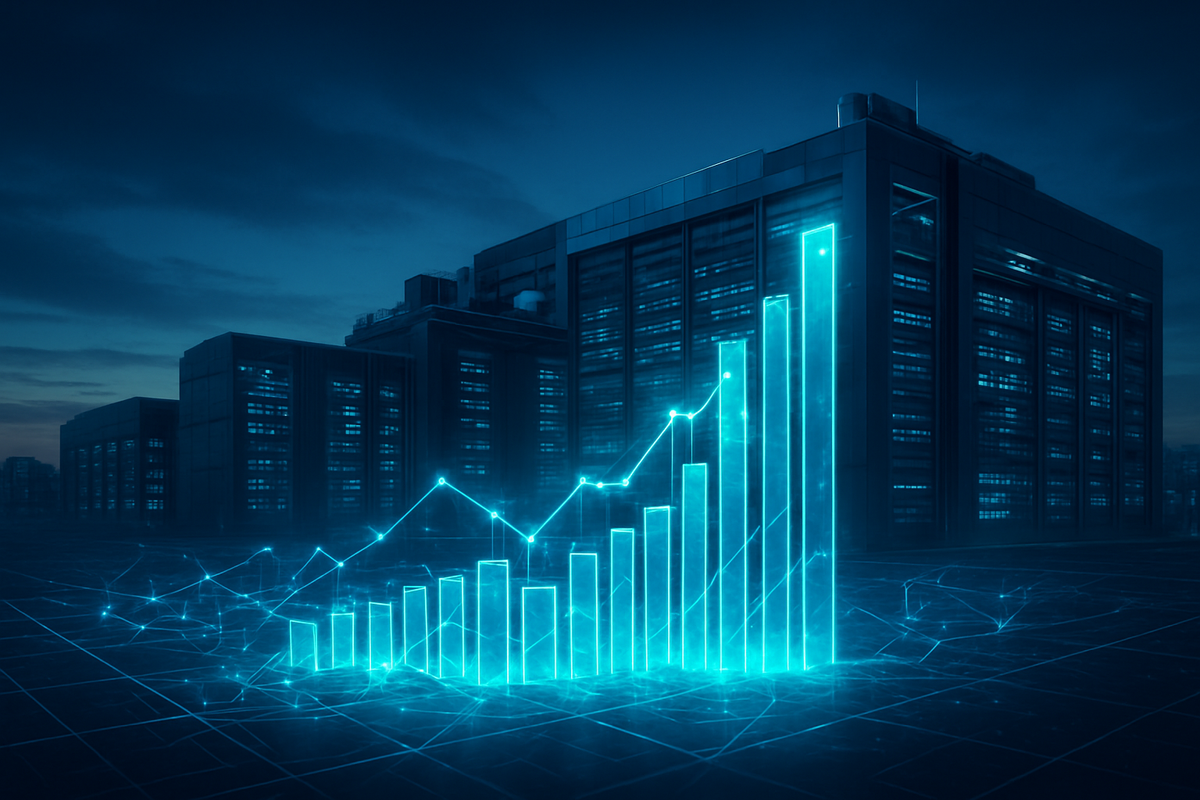
The narrative of early 2026 is one of maturation. We have transitioned from the frantic hardware-buying spree of 2023-2024—characterized by a desperate scramble for chips—into a sophisticated phase of operationalized intelligence. Leading financial institutions, including Goldman Sachs and J.P. Morgan, report that the world’s largest hyperscalers are on track to spend over $527 billion in Capex this year. This is not just a marginal increase; it represents a 30% jump from 2025 levels, as companies like Microsoft (NASDAQ: MSFT) and Alphabet (NASDAQ: GOOGL) double down on high-density data centers.
The timeline leading to this moment was paved by the "2025 Optimization Pivot." Throughout last year, major enterprises moved beyond testing Large Language Models (LLMs) and began integrating autonomous AI agents into their core business logic. By the time the current earnings season began this month, nearly 50% of S&P 500 companies reported measurable margin improvements directly attributed to AI-driven automation. This shift has turned AI from a speculative "cost center" into a robust "revenue engine," justifying the high price-to-earnings multiples that dominate the current market.
Winners and Losers in the Infrastructure Arms Race
The primary beneficiaries of this Capex surge are the companies providing the physical and logical backbone of the AI era. Nvidia (NASDAQ: NVDA) remains the cornerstone of the hardware movement, but the focus in 2026 has expanded to include networking and thermal management specialists. Arista Networks (NYSE: ANET) and Broadcom (NASDAQ: AVGO) have seen significant gains as the market shifts toward the ultra-low latency requirements of 2026-era AI clusters. Furthermore, as power availability becomes the primary bottleneck for data center growth, companies like Vertiv Holdings (NYSE: VRT) and Eaton (NYSE: ETN) have emerged as the "new utilities," providing the critical cooling and power infrastructure needed to keep 50-gigawatt grids operational.
Conversely, the "losers" in this environment are increasingly clear: the digital laggards. Firms that failed to modernize their data stacks during the 2024-2025 window are now finding themselves squeezed by competitors who can price products more aggressively due to lower operational overhead. Retailers and mid-market manufacturers with high debt levels and low tech integration are struggling to keep pace, as they face the double-edged sword of high interest rates and falling relative productivity. For these companies, the "Capex gap" is becoming an insurmountable moat.
A Historical Parallel: The Fiber Boom and the Utility Phase
The current market environment draws striking parallels to the fiber-optic build-out of the late 1990s, but with a crucial difference: the "utility phase" has arrived much faster. While the 1990s saw infrastructure built far ahead of demand, the 2026 AI build-out is struggling to keep up with demand. This supply-constrained growth has created a "sticky" inflation in the tech sector, keeping valuations resilient even as other parts of the economy fluctuate.
Broadly, this trend is also reshaping global policy. The EU AI Act, which became fully enforceable in late 2025, has forced many tech giants to pivot their Capex toward "Sovereign AI"—building localized data centers that comply with strict data residency and energy efficiency laws. This has triggered a ripple effect where regional infrastructure providers in Europe and Asia are seeing a windfall of investment from US-based tech giants looking to maintain their global footprint while adhering to new regulatory standards.
Looking Ahead: The 2027 Outlook and Strategic Pivots
As we look toward the remainder of 2026 and into 2027, the primary challenge for corporations will be the "ROI Hurdle." While the current Capex levels are supported by record margins, investors will eventually demand even higher returns on the half-trillion dollars being deployed. The next strategic pivot will likely involve "Edge AI"—moving the compute power away from massive centralized data centers and into localized, on-device processing.
Market opportunities are also emerging in the nuclear and renewable energy sectors. Given that US data center power demand is projected to grow by 50 gigawatts by 2028, companies are already signing 20-year power purchase agreements with small modular reactor (SMR) developers. This intersection of "Big Tech" and "Big Energy" will likely be the defining investment theme of the next eighteen months, as the digital economy seeks a sustainable physical foundation.
Summary: A New Foundation for Growth
The start of 2026 has confirmed that the massive corporate investments in AI and digital infrastructure are not a fleeting trend but the bedrock of a new economic era. With S&P 500 earnings growth projected to hit 12% this year and margins reaching historic highs, the market's upward trajectory is firmly supported by fundamental efficiency gains rather than pure speculation. The $527 billion being spent by hyperscalers is effectively a "floor" for the tech sector, ensuring a steady stream of demand for semiconductors, networking hardware, and energy infrastructure.
For investors, the coming months will require a discerning eye. The "easy money" phase of the AI rally has concluded, and the market is now rewarding execution and integration. Watch for companies that can demonstrate "positive operating leverage"—where revenue grows significantly faster than Capex-inflated expenses. As long as the efficiency gains from Agentic AI continue to outpace the costs of the hardware required to run them, the 2026 bull market appears to have plenty of room to run.
This content is intended for informational purposes only and is not financial advice.