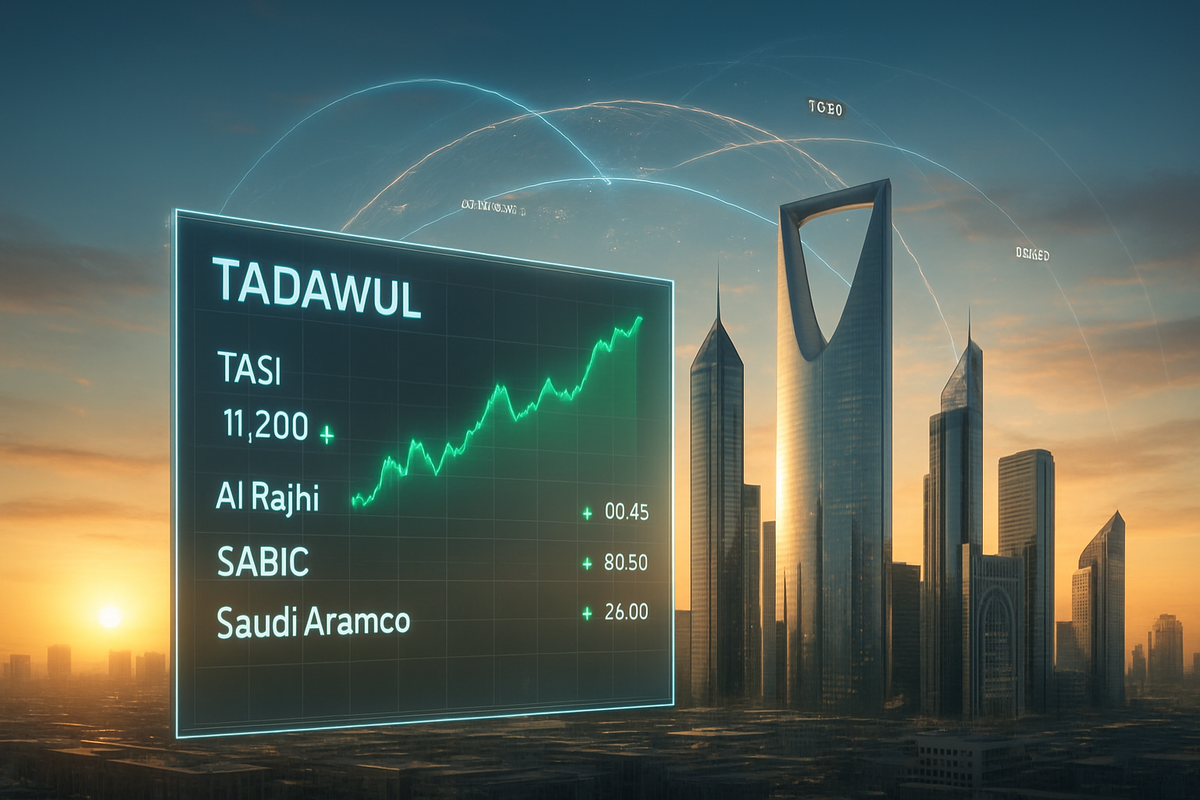
In a move that signals the dawn of a new era for Middle Eastern finance, the Saudi Arabian Capital Market Authority (CMA) announced on January 6, 2026, that it will officially eliminate the Qualified Foreign Investor (QFI) framework. Effective February 1, 2026, the Kingdom’s stock exchange, the Tadawul, will be open to all categories of foreign investors, including individual retail traders and smaller institutional firms, marking the final stage of a decade-long journey toward full market liberalization.
This historic decision effectively dismantles the $500 million assets under management (AUM) requirement that previously restricted direct access to only the world’s largest financial institutions. By allowing direct legal title to shares for all international participants, Saudi Arabia is positioning itself as the preeminent financial hub of the region, aiming to capture a larger slice of global capital flows and accelerate the funding required for its ambitious Vision 2030 projects.
The End of the QFI Era: A Timeline of Transformation
The announcement by CMA Chairman Mohammed El-Kuwaiz is the culmination of a strategic roadmap that began in 2015 when the Kingdom first allowed foreign institutions to trade its stocks under strict conditions. Since then, the QFI program has been gradually eased, but the February 1, 2026, deadline represents a total structural shift. By retiring the "Swap Agreement" framework—which previously forced smaller investors to gain exposure through synthetic derivatives without voting rights—the CMA is granting global investors the same legal protections and ownership rights as domestic Saudi citizens.
The timeline leading to this moment was punctuated by significant milestones in late 2025. In July 2025, the CMA simplified account opening for GCC residents, followed by a public consultation period in the fourth quarter that laid the groundwork for the updated "Rules for Foreign Investment in Securities." The market’s reaction has been immediate and optimistic; analysts expect this move to significantly boost the Kingdom’s "accessibility score" in global benchmarks.
Key stakeholders, including the Public Investment Fund (PIF) and the CMA, have championed this reform to deepen the market’s liquidity. Historically, the Tadawul has been dominated by local retail investors, whose trading patterns often lead to high volatility. By opening the floodgates to a more diverse international base, the Kingdom hopes to stabilize its markets and provide a more robust environment for the massive wave of Initial Public Offerings (IPOs) planned for 2026 and 2027.
Blue-Chip Beneficiaries and the New Competitive Landscape
The liberalization is expected to provide a massive tailwind for the Kingdom’s "national champions." Saudi Aramco (TADAWUL: 2222), the world’s largest energy company, stands to benefit as smaller international boutique funds and retail investors can now purchase its shares directly. While the government and PIF maintain a firm grip on the majority of Aramco’s shares, the increased accessibility is expected to tighten its spread and improve price discovery among a more globalized shareholder base.
In the financial sector, Al Rajhi Bank (TADAWUL: 1120) and the Saudi National Bank (TADAWUL: 1180) are poised to see significant inflows. Al Rajhi, often the most-traded stock by international institutions, is likely to see its foreign ownership—already surpassing 14% in late 2024—climb even higher as passive index-tracking funds adjust their weights. Similarly, the Saudi National Bank, which serves as a primary financier for Vision 2030 giga-projects, will find it easier to attract the diversified capital needed to bridge the estimated $137 billion funding gap in the Saudi banking sector.
On the industrial front, SABIC (TADAWUL: 2010), the global chemicals giant, is expected to see its valuation rerated. Having spent 2024 and 2025 divesting non-core assets like its steel business, SABIC is now a leaner, more focused entity. With foreign ownership in SABIC projected to rise from roughly 6% to as much as 10% by the end of 2026, the company is set to become a staple in global emerging market portfolios. Conversely, smaller local firms that lack international visibility may face "liquidity drain" as capital gravitates toward these high-quality, index-heavy names.
Broader Significance: Vision 2030 and the Emerging Market Shift
This reform is not happening in a vacuum; it is a critical component of the Financial Sector Development Program (FSDP). As Saudi Arabia enters the "maximizing impact" phase of Vision 2030, the stock market has been tasked with becoming a primary engine for capital formation. With a projected budget deficit of SAR 165 billion ($44 billion) for 2026, the Kingdom needs to raise approximately $58 billion in total financing this year. By opening the Tadawul, the state can more effectively recycle capital from mature assets into new giga-projects like NEOM and the Red Sea Project via secondary offerings and IPOs.
The move also intensifies the competition within the MSCI Emerging Markets Index. Currently holding a weight of approximately 3.3% to 4.2%, Saudi Arabia’s inclusion in the "all-access" category could trigger a significant re-rating. Analysts at Jefferies estimate that if the current 49% foreign ownership cap is eventually lifted—a review for which is slated for later in 2026—the Kingdom could attract between $3.4 billion and $10.2 billion in passive inflows alone.
Historically, this shift mirrors the liberalization of the South Korean and Chinese markets (via the Stock Connect programs), which led to multi-year periods of institutional accumulation. By removing the QFI barrier, Saudi Arabia is effectively telling the world that it is no longer a "niche" or "restricted" market, but a mainstream destination for global equity portfolios, challenging the dominance of other EM heavyweights like Brazil or India.
What Comes Next: The Road to 100% Ownership
In the short term, market participants should prepare for a period of increased volatility as the new rules take effect on February 1. The influx of retail and smaller institutional money may lead to rapid price adjustments in high-growth sectors. However, the long-term outlook is one of institutionalization. The CMA has already hinted that the next frontier is the review of the 49% foreign ownership cap. If this limit is raised or removed entirely for non-strategic sectors later in 2026, it would represent the final "holy grail" of market reform.
Investors should also watch for a surge in the IPO pipeline. There are currently over 50 applications under regulatory review, and the February opening provides the perfect backdrop for these companies to list. The success of these IPOs will be a litmus test for the market’s new capacity to absorb large-scale capital raises. Strategic pivots are also expected from local asset managers, who must now compete with global giants like BlackRock and Vanguard for a share of the domestic market.
The primary challenge will be ensuring that the market's infrastructure—including clearing, settlement, and custody services—can handle the increased volume from a more fragmented investor base. Any technical hiccups in the months following the February 1 launch could dampen international enthusiasm, making the operational rollout as important as the regulatory change itself.
Summary and Final Assessment
The decision to open the Saudi stock market to all foreign investors is a watershed moment for the Middle East. By eliminating the QFI framework, Saudi Arabia has successfully transitioned from a closed, oil-dependent economy to a transparent, globally integrated financial powerhouse. The key takeaways for investors are clear: the barriers to entry are gone, the liquidity profile of the market is set to improve, and the Kingdom’s weight in global indices is on an upward trajectory.
Moving forward, the market will likely be characterized by a "flight to quality," where established giants like Saudi Aramco and Al Rajhi Bank lead the way in attracting new capital. The significance of this event cannot be overstated; it is the final piece of the puzzle for the Tadawul’s emergence as a top-ten global exchange.
In the coming months, investors should keep a close eye on the CMA’s review of ownership caps and the performance of the 2026 IPO vintage. As the Kingdom continues to decouple its economy from crude oil prices, the stock market will serve as the ultimate barometer for the success of the Saudi transformation.
This content is intended for informational purposes only and is not financial advice.