As we enter the first week of 2026, the era of "blind faith" in artificial intelligence investment has officially concluded. The "Big Four" hyperscalers—Amazon (NASDAQ: AMZN), Microsoft (NASDAQ: MSFT), Alphabet (NASDAQ: GOOGL), and Meta Platforms (NASDAQ: META)—have closed out a staggering 2025 with a collective capital expenditure (Capex) estimated at nearly $400 billion. However, as 2026 projections surge toward a historic $527 billion to $602 billion range, the market's focus has shifted from the quantity of chips purchased to the quality of the revenue they generate.
This "Utility Phase" of the AI cycle marks a pivotal moment for Wall Street. While the initial years of the AI boom were defined by a desperate "land grab" for high-end silicon, 2026 is becoming the year of the audit. Investors are no longer content with promises of future productivity; they are demanding a granular accounting of how these massive infrastructure outlays are translating into bottom-line earnings and free cash flow.
The Infrastructure Arms Race: From Land Grab to Utility
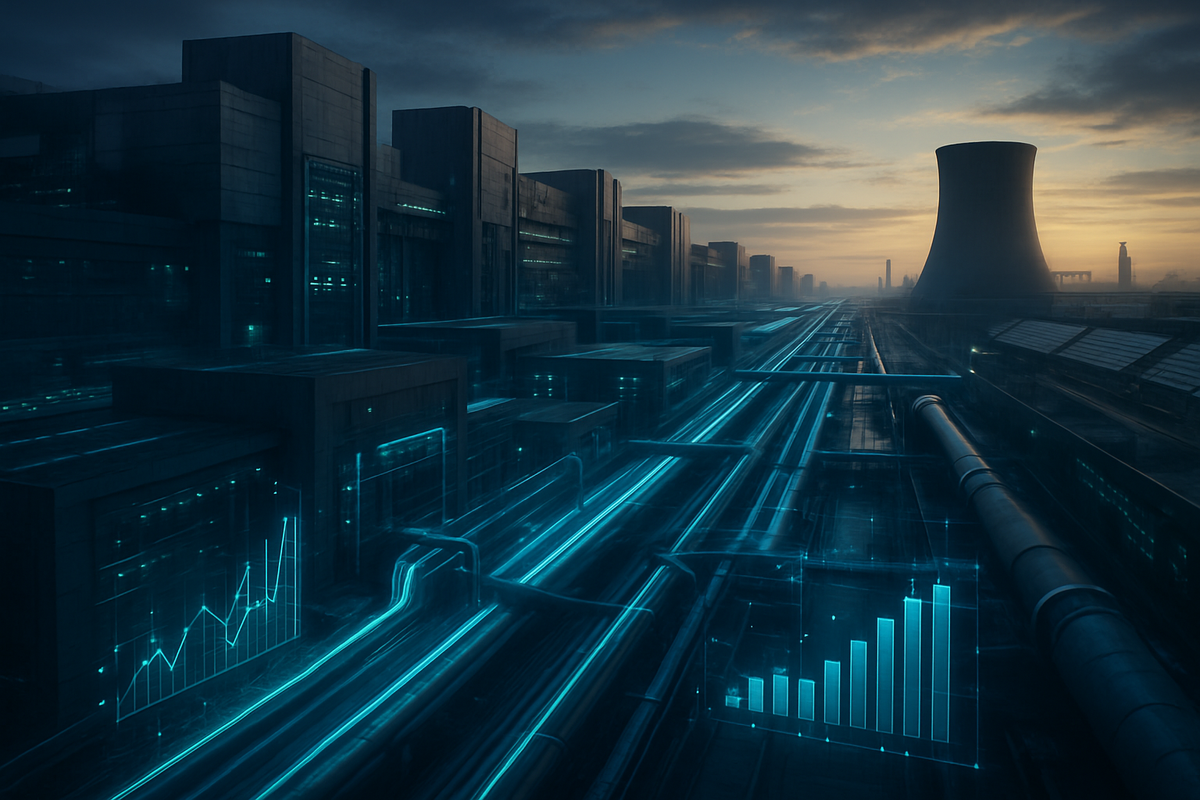
The timeline leading to this $500 billion milestone has been a frantic escalation of infrastructure building. Throughout 2024 and 2025, the narrative was dominated by the procurement of NVIDIA (NASDAQ: NVDA) H100 and Blackwell chips. However, by late 2025, the bottleneck shifted from silicon supply to power availability. The "Big Four" have transitioned from being software companies to becoming some of the world’s largest industrial and energy players. Microsoft and Amazon, in particular, spent the latter half of 2025 securing "behind-the-meter" power contracts, including investments in small modular reactors (SMRs) and natural gas plants to bypass aging public grids.
Initial market reactions to these massive budgets have been mixed. In late 2025, Amazon saw its free cash flow drop nearly 60% as it prioritized AWS capacity, leading to a temporary "FCF crunch" that tested investor patience. Conversely, Alphabet emerged as a late-2025 favorite, with its stock rising 65% over the year as it demonstrated that its vertically integrated stack—using its own custom TPU v7 "Ironwood" chips—could deliver AI services at a significantly lower cost-per-token than competitors relying solely on third-party silicon.
Winners, Losers, and the Custom Silicon Pivot
In the current landscape, Alphabet (NASDAQ: GOOGL) is widely viewed as the ROI leader. By deploying its TPU v7 architecture, the company has insulated itself from the high premiums of the merchant silicon market, allowing for the profitable integration of Gemini AI across Search and YouTube. Meta Platforms (NASDAQ: META) has also silenced critics; its AI-driven "Advantage+" advertising tools reached a $60 billion annual run rate by the end of 2025, providing a direct, measurable link between its $70 billion infrastructure spend and top-line growth.
On the other end of the spectrum, Microsoft (NASDAQ: MSFT) faces the most intense scrutiny. Despite AI services contributing 18 percentage points to Azure’s growth in late 2025, its capital intensity has reached 45% of revenue. Investors are questioning the "payback period" for its multi-billion dollar OpenAI partnership and its custom Maia silicon. Meanwhile, NVIDIA (NASDAQ: NVDA) remains a winner but faces a changing market; while its upcoming "Rubin" R200 architecture is highly anticipated for late 2026, it must now compete with the "credible alternatives" of internal chips from its largest customers, which are expected to account for 45% of the AI chip market by 2027.
Wider Significance: The Energy and Sovereign AI Ripple Effects
The scale of this spending is reshaping more than just the tech sector. The shift toward "AI-ready" facilities has forced a revolution in data center design, moving away from traditional air cooling to liquid-to-chip and immersion cooling systems to handle rack densities exceeding 200 kW. This has created a secondary boom for industrial and power management firms. Furthermore, the move toward modular, factory-built data centers is reducing construction timelines from years to months, effectively treating data center build-outs like high-speed manufacturing lines.
Historically, this capital cycle mirrors the fiber-optic build-out of the late 1990s, but with a crucial difference: the companies spending the money today are already highly profitable and possess massive cash reserves. However, the regulatory environment is tightening. As Big Tech moves into the energy sector, they are facing increased scrutiny from utility regulators and environmental groups. The "Sovereign AI" trend—where nations build their own domestic AI infrastructure—is also complicating the global footprint of these hyperscalers, forcing them to navigate complex data residency and energy sovereignty laws.
The 2026 Outlook: Inference and the Edge
Looking ahead to the remainder of 2026, the industry is bracing for a transition from "training" to "inference." As models like Meta’s Llama 5 and the next generation of OpenAI’s GPT reach maturity, the focus will shift to running these models efficiently for hundreds of millions of users. This favors companies with strong edge-computing capabilities and efficient custom silicon. We expect a strategic pivot toward "Edge AI," where smaller, specialized models are run locally on devices rather than in massive centralized data centers, potentially easing some of the pressure on the power grid.
The short-term challenge remains the "Power Bottleneck." If Big Tech cannot secure the gigawatts required for their 2026 projections, we may see a forced slowdown in Capex regardless of demand. However, the market opportunity remains vast; analysts estimate that for every gigawatt of capacity added, AWS and Azure can generate approximately $3 billion in annual revenue by 2027. The successful companies will be those that can solve the energy puzzle while maintaining a clear path to monetization.
Summary of the AI Supercycle
As we navigate the opening weeks of 2026, the key takeaway is that the AI trade has matured. The "Big Four" are no longer being rewarded for simply spending; they are being judged on their ability to turn electricity and silicon into sustainable cash flow. Alphabet and Meta have set a high bar for ROI, while Microsoft and Amazon are navigating the growing pains of massive infrastructure scaling.
Investors should watch the upcoming Q1 2026 earnings calls for specific updates on "payback periods" and energy procurement strategies. The era of the $500 billion Capex budget is here, and while the potential for growth is unprecedented, the margin for error has never been thinner. The winners of 2026 will not be those who build the most, but those who build the most efficiently.
This content is intended for informational purposes only and is not financial advice.