In a move that has fundamentally recalibrated the global energy landscape, the United States has aggressively eased its long-standing sanctions on Venezuela’s oil and gas sectors. As of February 17, 2026, the transition from a policy of "maximum pressure" to one of strategic reconstruction is in full swing, allowing western energy giants to resume large-scale operations in the Orinoco Belt. This shift comes at a critical juncture for the world economy, providing a much-needed supply cushion as geopolitical tensions in the Middle East continue to threaten traditional supply routes through the Strait of Hormuz.
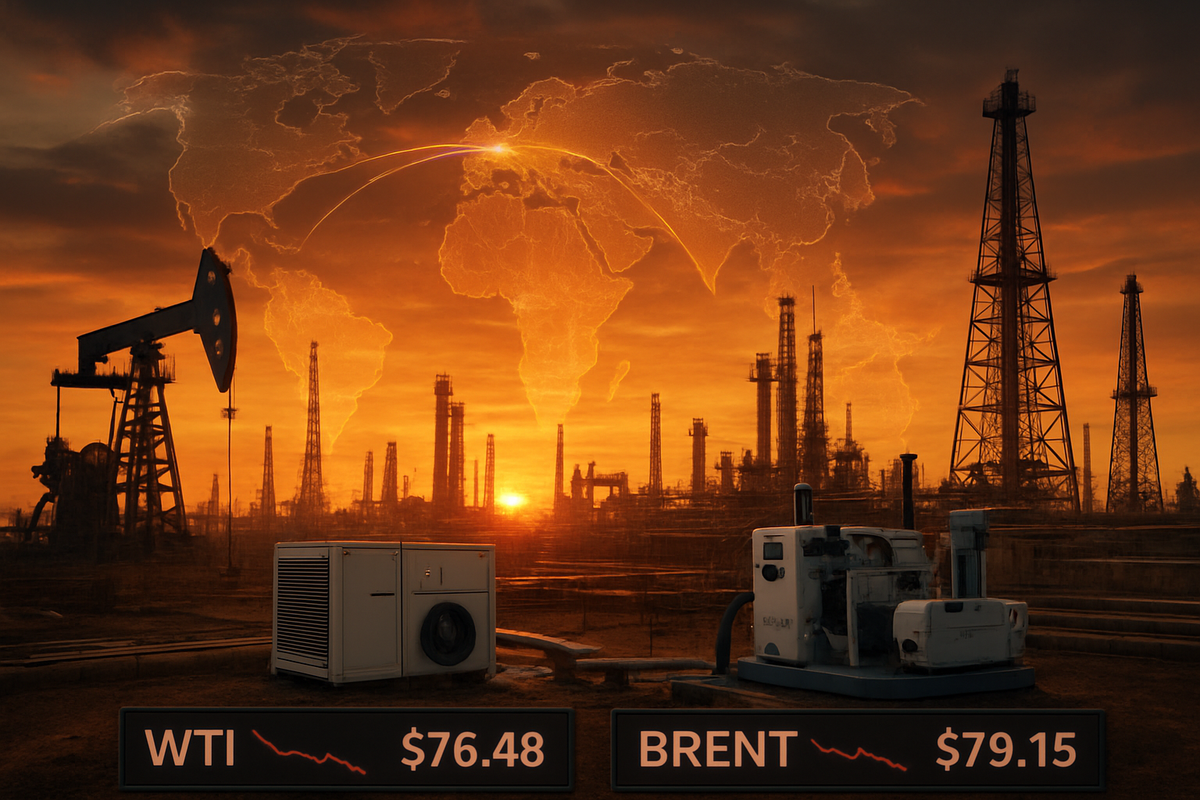
The immediate implications of this policy shift have been palpable across commodity markets. Brent crude and West Texas Intermediate (WTI) have both seen downward pressure as traders price in the return of Venezuelan "heavy" crude to the global market. While the infrastructure in Venezuela remains dilapidated after years of underinvestment, the arrival of U.S. technology and capital is already beginning to stabilize prices, with Brent trading near $60 per barrel and WTI hovering around the $56–$57 mark. This influx of supply is serving as a strategic buffer, dampening the "war premium" that has historically spiked during periods of Middle Eastern instability.
A Rapid Reversal: From Blockade to Reconstruction
The path to this current state of affairs was marked by a dramatic escalation followed by a swift regulatory pivot. Following the expiration of the original General License 44 in 2024, the U.S. briefly returned to a strict enforcement regime throughout 2025, which included naval interdictions of sanctioned tankers. However, following the events of early January 2026—characterized by the U.S. Treasury and State Department as a "foundational shift" in Venezuelan governance—the Office of Foreign Assets Control (OFAC) issued a suite of groundbreaking licenses. Specifically, General Licenses 46 and 47 have authorized U.S. companies to not only lift and transport Venezuelan oil but also to export essential diluents back to the country, a move necessary for processing the nation's extra-heavy crude.
Key to this transformation was the issuance of General License 48, which specifically targeted the oilfield services sector. Unlike previous years where companies were limited to "basic maintenance," this new framework allows for full-scale drilling, well completion, and infrastructure rehabilitation. The timeline has moved with surprising speed; within weeks of the new licenses being issued, the U.S. Department of Energy and the Treasury established a "Qatar Fund" mechanism. This ensures that all proceeds from Venezuelan oil sales are channeled into transparent, U.S.-monitored accounts dedicated to humanitarian aid and national reconstruction, effectively decoupling the oil wealth from the political structures of the previous decade.
Corporate Frontrunners: Who Stands to Gain?
The clear frontrunner in this geopolitical opening is Chevron (NYSE: CVX). Having maintained a skeletal presence in the country through even the most restrictive years, Chevron was uniquely positioned to scale production almost immediately. Its joint ventures, including Petropiar and Petroindependencia, are already reporting a surge in output, with plans to increase production by an additional 120,000 barrels per day (bpd) over the next 18 months. For Chevron, the easing of sanctions represents the unlocking of billions of dollars in "trapped" assets and a significant boost to its long-term reserve replacement ratio.
Close behind are the oilfield service titans SLB (NYSE: SLB) and Halliburton (NYSE: HAL). Under General License 48, these companies are no longer restricted to mere asset protection. SLB is currently deploying advanced seismic imaging and horizontal drilling technology to revive mature fields that have been idle for nearly a decade. Halliburton, meanwhile, has initiated a massive recruitment drive for its Venezuelan operations, targeting the rehabilitation of over 10,000 "stripper" wells. For these service providers, Venezuela represents a "brownfield" opportunity of unparalleled scale, offering high-margin contracts that are largely insulated from the exploration risks of deepwater or frontier basins.
While the "first movers" are reaping the early rewards, others remain more cautious. ExxonMobil (NYSE: XOM) and ConocoPhillips (NYSE: COP) have entered into preliminary discussions with the U.S. State Department regarding a potential return. However, both companies are reportedly seeking formal legal assurances and the settlement of billions in outstanding expropriation claims before committing significant capital. If these legal hurdles are cleared, the entry of Exxon and Conoco could signal a second wave of investment that could push Venezuelan production toward the 2 million bpd mark by 2027.
Balancing the Global Scales
The significance of Venezuela’s return extends far beyond corporate balance sheets; it is a linchpin in a broader U.S. strategy to isolate rival energy producers. By flooding the market with Venezuelan heavy crude, the U.S. is effectively providing an alternative to Russian and Iranian grades. This has been particularly evident in India, where the U.S. has granted specific waivers to companies like Reliance Industries (NSE: RELIANCE) to purchase Venezuelan crude. This policy is designed to "pull" India away from its dependence on sanctioned Russian barrels, thereby tightening the economic net around Moscow.
Furthermore, the surge in Venezuelan output presents a direct challenge to the pricing power of the OPEC+ coalition. Because Venezuela is currently operating outside the traditional quota system as it seeks to recover its economy, its production growth acts as a "leak" in OPEC’s efforts to maintain high price floors. This has created a friction point between Washington and Riyadh, as the U.S. uses Venezuelan oil as a tool to keep domestic gasoline prices low and dampen global inflationary pressures. The return of the "Western Hemisphere" oil narrative is a direct counter-weight to the volatility currently emanating from the Persian Gulf.
The Road Ahead: Opportunities and Bottlenecks
In the short term, the primary challenge for the Venezuelan oil sector is a staggering $100 billion infrastructure deficit. Pipelines are corroded, storage tanks are leaking, and the electrical grid—essential for pumping heavy oil—remains unreliable. While the new U.S. licenses allow for investment, the physical reality on the ground will limit how quickly production can ramp up. Analysts expect a "production ceiling" of approximately 1.5 million bpd by the end of 2026, a significant increase from the 800,000 bpd seen in early 2024, but still far below the country’s 1990s peak of 3 million bpd.
Long-term, the market must weigh the risk of a "political pivot." While the current U.S. administration has committed to the reconstruction of Venezuela, the 2026 mid-term elections and future presidential cycles could lead to shifts in sanctions policy. Investors and major oil companies are likely to prioritize "quick-win" projects—such as well workovers and debottlenecking—over massive, multi-decade capital projects like new upgraders or refineries. This "tread lightly" approach will likely define the next two years of operations in the region.
A Fragile Equilibrium
The easing of sanctions on Venezuela marks the end of an era of energy isolation and the beginning of a complex, U.S.-led reintegration into the global market. The move has already provided a necessary safety valve for global oil prices, keeping WTI and Brent from skyrocketing despite persistent Middle Eastern conflict. For investors, the focus shifts from "if" Venezuela will return to "how fast" its infrastructure can be repaired.
Moving forward, the market should closely monitor the monthly production reports from the Orinoco Belt and the status of the "Qatar Fund" disbursements. Any sign of political instability or a breakdown in the humanitarian revenue-sharing agreement could lead to a snap-back of sanctions, once again removing hundreds of thousands of barrels from the market. For now, however, the "Venezuelan discount" is back, and the global energy map has been redrawn in Washington's favor.
This content is intended for informational purposes only and is not financial advice.