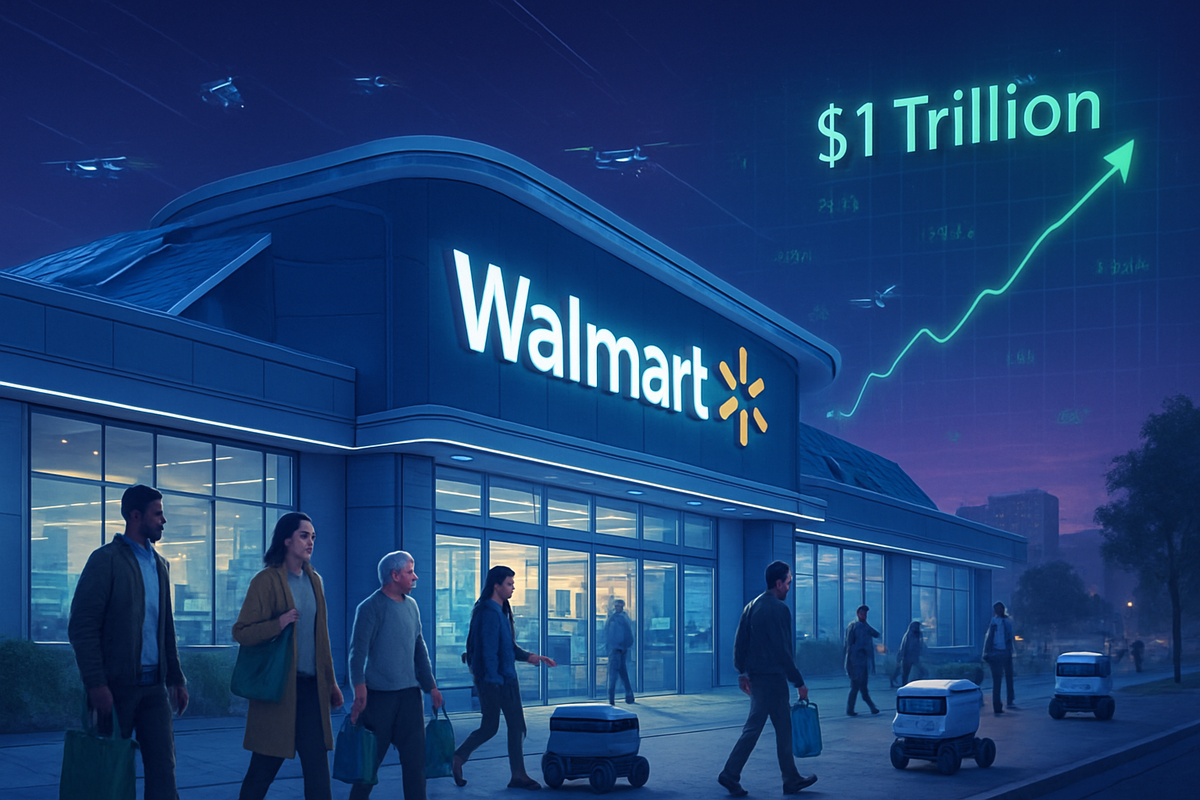
As the global retail landscape prepares for a pivotal update, all eyes are on Walmart Inc. (NYSE: WMT) as it readies its fourth-quarter fiscal 2026 earnings report scheduled for the morning of February 19, 2026. Following a tumultuous end to 2025—marked by a record-breaking 43-day federal government shutdown and shifting fiscal policies—Walmart’s results are expected to serve as the definitive report card for the U.S. consumer. With the company recently crossing the historic $1 trillion market capitalization threshold, investors are looking for confirmation that its aggressive pivot toward high-margin services like advertising and automated fulfillment can withstand a cooling but still complex inflationary environment.
The stakes for this earnings release extend far beyond a single ticker symbol; they represent a vital pulse check on the "K-shaped" recovery currently defining American spending. While retail sales nationwide remained flat in December 2025 due to the disruption of federal paychecks and food assistance benefits, Walmart appears to have navigated the storm by capturing a massive influx of "trade-down" shoppers. This week’s report will clarify whether the retail giant can maintain its momentum as the market anticipates a massive spending tailwind from the "One Big Beautiful Bill" (OBBBA) stimulus measures, which are expected to supercharge tax refunds beginning this month.
Resilience in the Face of Fiscal Volatility
Wall Street remains overwhelmingly optimistic about Walmart’s performance, with consensus estimates placing earnings per share (EPS) at $0.73, a robust 10% increase over the previous year. Revenue is forecasted to hover near a staggering $190 billion for the quarter, driven by a projected 4.1% rise in U.S. comparable-store sales. This growth is particularly notable given the timeline: the holiday shopping season was heavily impacted by a federal shutdown that paralyzed government agencies from October into November 2025. While other retailers reported a "holiday hangover," Walmart’s focus on grocery essentials and value pricing likely cushioned the blow, allowing it to gain market share while competitors struggled with inventory gluts.
Key stakeholders, including CEO Doug McMillon and CFO John David Rainey, have spent the last quarter emphasizing Walmart’s transition from a traditional big-box retailer into a tech-centric platform. The market reacted favorably to the company’s recent AI integrations, which have streamlined supply chain logistics and reduced labor overhead. Investors will be listening closely for updates on the "Walmart Connect" advertising arm, which has emerged as a high-margin engine of growth, helping to offset the thinner margins typically associated with its 60% revenue concentration in groceries.
Initial market sentiment heading into the report is characterized by a "flight to quality." As of February 17, 2026, Walmart’s stock has outperformed the broader retail index, trading at a premium valuation of approximately 45 times forward earnings. This reflects a fundamental shift in investor perception; no longer viewed as just a defensive play, Walmart is now seen as a dominant technology and logistics leader capable of sustaining growth even when discretionary spending elsewhere in the economy begins to flag.
Navigating the Competitive Divide: Winners and Losers
The disparity between Walmart and its primary rivals has never been more pronounced. Target Corp (NYSE: TGT) has found itself on the losing side of the current economic cycle, with its shares plummeting 34% over the last year. Unlike Walmart’s grocery-heavy mix, Target remains tethered to discretionary categories like home goods and apparel, which have been hit hard by the "government shutdown hangover." Analysts expect Target’s upcoming results to show a 10.4% drop in EPS, highlighting a stark divergence where Walmart wins on "needs" while Target loses on "wants."
Meanwhile, Amazon.com, Inc. (NASDAQ: AMZN) remains a formidable challenger, recently reporting a 14% revenue surge fueled by its cloud computing and e-commerce dominance. However, in the physical retail space, Walmart’s omnichannel strategy—blending 4,700 U.S. stores with a now-profitable e-commerce wing—has created a "defensive moat" that Amazon struggles to replicate in the grocery sector. As higher-income households (those earning over $100,000 annually) increasingly migrate to Walmart for their weekly essentials, the company is effectively siphoning value away from mid-tier grocers and specialty retailers.
The "winners" in this environment are those with the scale to absorb inflationary pressures and the capital to invest in automation. Costco Wholesale Corporation (NASDAQ: COST) is also expected to benefit from the current "bulk-buying" trend, but Walmart’s broader reach into rural and urban markets gives it a unique advantage in capturing the lower-to-middle income demographic that is most sensitive to price fluctuations. Conversely, smaller regional grocery chains and department stores face an uphill battle, as they lack the pricing power to compete with Walmart’s "Everyday Low Price" (EDLP) guarantee amidst rising tariff concerns.
Industry Trends and the Shadow of New Tariffs
Walmart's Q4 report arrives at a critical juncture for U.S. trade policy. With core inflation cooling to a range of 2.4% to 2.7% in early 2026, the primary threat to retail margins has shifted from general price increases to the implementation of new trade tariffs. Management’s guidance on how they intend to mitigate these costs—whether through further supply chain diversification or by passing costs on to consumers—will set the tone for the entire retail sector for the remainder of 2026. Historically, Walmart has used its massive scale to force suppliers to absorb cost increases, a tactic that may once again protect its margins at the expense of its vendors.
Furthermore, the "retail-media" trend is reaching a fever pitch. Walmart’s ability to monetize its vast trove of first-party shopper data through digital advertising is a strategy now being mimicked by everyone from grocery chains to hardware stores. By turning its aisles into ad space, Walmart is effectively subsidizing its low-margin food business with high-margin digital revenue. This shift mirrors the evolution of the airline industry, where "ancillary revenues" like baggage fees and credit card partnerships often outweigh the profit from the actual flight.
The broader significance of Walmart’s performance also touches on the future of labor. The company’s heavy investment in warehouse automation and drone delivery is no longer a pilot program; it is a core operational reality. As labor costs remain sticky, Walmart’s success in replacing manual tasks with AI-driven logistics will be a template for the entire industry. This "productivity miracle" is what has allowed Walmart to maintain its $1 trillion valuation despite a macro environment that would have traditionally suppressed retail stocks.
Looking Ahead: The Stimulus Bump and Strategic Pivots
Looking toward the spring of 2026, the "short-term" outlook for Walmart is dominated by the anticipated impact of the OBBBA stimulus. Because the 2025 tax changes were implemented via deductions rather than withholding adjustments, American consumers are expected to receive tax refunds roughly 44% larger than in previous years. This "liquidity event" in March and April could trigger a massive spending spree in discretionary categories like electronics and home improvement—areas where Walmart has recently seen softer demand. Investors will be looking for management to confirm that they are stocked and ready to capture this windfall.
Longer-term, the strategic pivot will likely focus on international expansion and the further "Amazon-ification" of the Walmart+ membership program. As the U.S. market reaches saturation, Walmart’s ability to export its high-tech, grocery-led model to emerging markets will be the next frontier for growth. Challenges remain, however, particularly regarding regulatory scrutiny over its market dominance and the potential for anti-trust inquiries as it expands its footprint in the advertising and healthcare sectors.
The most likely scenario for the coming months is one of continued consolidation. Walmart is expected to use its fortress balance sheet to potentially acquire smaller tech or logistics startups that can further refine its "last-mile" delivery capabilities. For the market, the challenge will be determining if the current 45x P/E multiple is sustainable or if the stock has become "priced for perfection," leaving little room for error if the stimulus bump fails to materialize.
Final Assessment: The Bellwether’s Verdict
Walmart stands at the intersection of a fragile consumer recovery and a technological revolution in retail. The key takeaway from this preview is that Walmart is no longer just a place where people buy cheap goods; it is a sophisticated logistics and data machine that has successfully captured the high-income "trade-down" shopper. The upcoming earnings report will likely confirm that while the U.S. consumer is strained, they are not broken—they are simply becoming more disciplined, a trend that plays directly into Walmart's hands.
Moving forward, the market will transition from worrying about inflation to worrying about growth and policy-driven costs like tariffs. Walmart’s ability to act as a "macro hedge" makes it a foundational holding for many, but its high valuation means that any sign of slowing traffic or margin compression could lead to a sharp correction. Investors should watch for three things: the growth rate of Walmart Connect, the specific guidance regarding 2026 tariffs, and any commentary on how the early February tax refund data is trending. As the largest private employer in the U.S., Walmart’s results this week will tell us not just how the company is doing, but how the American people are faring in a post-shutdown world.
This content is intended for informational purposes only and is not financial advice.