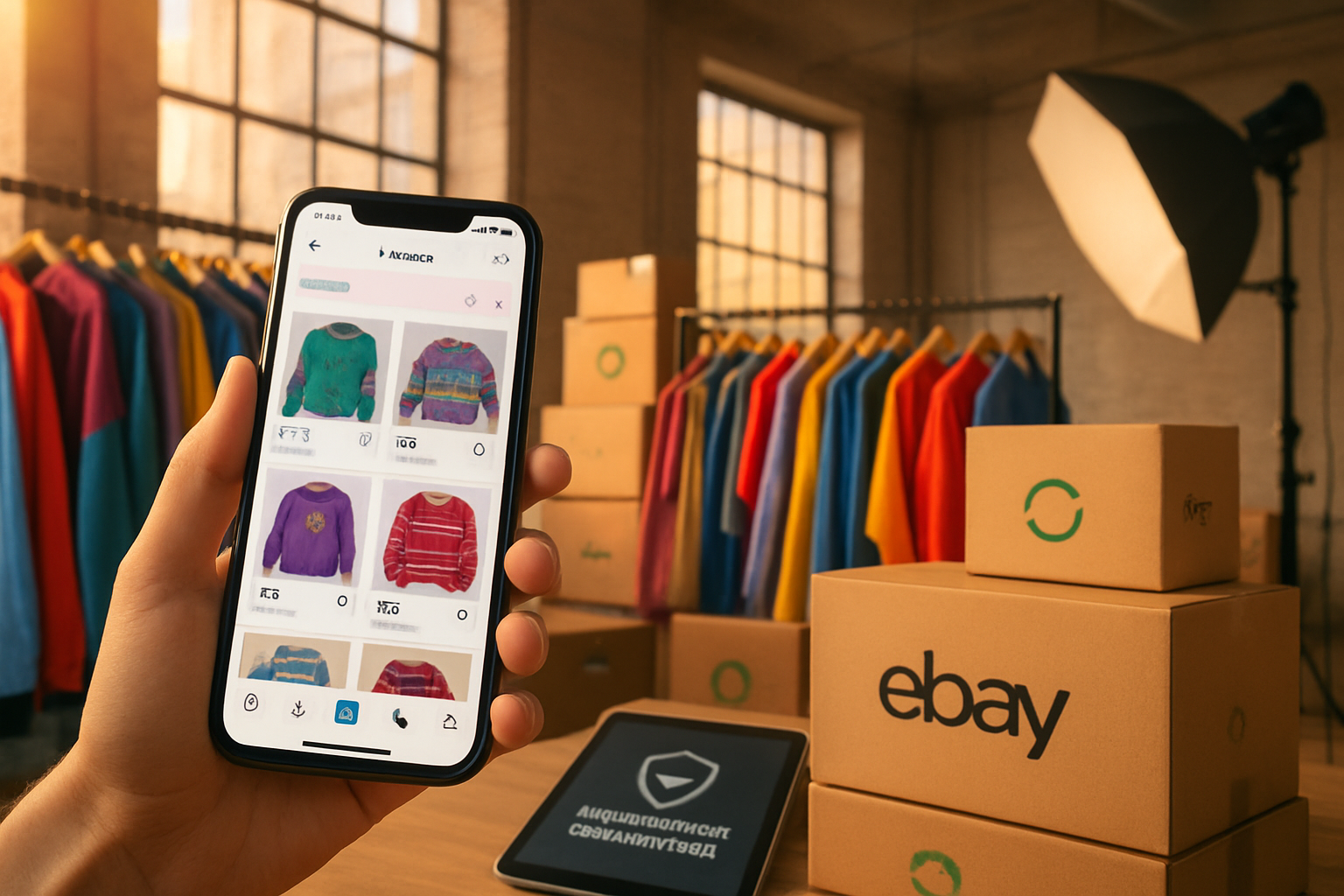
In a transformative move for the global recommerce market, eBay Inc. (NASDAQ: EBAY) announced on February 18, 2026, that it has entered into a definitive agreement to acquire the social fashion marketplace Depop from Etsy, Inc. (NASDAQ: ETSY). The deal, valued at approximately $1.2 billion in cash, signals a massive consolidation in the resale sector as the industry's pioneer seeks to recapture the high-growth Gen Z demographic and solidify its position at the center of the "circular economy."
The acquisition marks a strategic reversal for the broader e-commerce landscape. For eBay, it is an aggressive play to integrate a "social-first" shopping experience that has eluded the legacy platform for years. For Etsy, the sale represents a retreat from its "House of Brands" strategy, as the company offloads the subsidiary at a roughly $420 million loss compared to its $1.625 billion purchase price in 2021. The immediate market reaction has been one of cautious optimism for eBay’s growth prospects and a sense of relief for Etsy investors looking for a leaner, more focused core business.
The Deal: A Multi-Billion Dollar Pivot into Social Commerce
The acquisition is expected to close in the second quarter of 2026, subject to regulatory approvals. Under the terms of the agreement, Depop will continue to operate as a standalone brand and app, maintaining its distinct community-led identity and its headquarters in London. However, behind the scenes, eBay plans to integrate its sophisticated global logistics, payment processing, and its highly successful "Authenticity Guarantee" infrastructure into the Depop ecosystem.
The timeline leading to this blockbuster deal was paved by a series of aggressive moves by eBay CEO Jamie Iannone. Throughout 2024 and 2025, eBay systematically removed selling fees for pre-owned clothing in key markets like the UK to compete with the "fee-free" models of Vinted and Depop. This defensive strategy eventually turned offensive as eBay looked to own the platforms that were siphoning off its younger users. The negotiations reportedly intensified in late 2025 after Etsy faced mounting pressure from activist investors to streamline its operations and focus on its primary handmade and vintage marketplace.
Key stakeholders, including Depop CEO Kruti Patel Goyal, have expressed confidence that eBay’s scale will provide the technical "firepower" needed to expand Depop beyond its European and U.S. strongholds. For eBay, the prize is clear: approximately 90% of Depop’s 7 million active buyers are under the age of 34. By bringing these "Zillennials" into the eBay fold, the company is securing a lifetime of future transactions from a cohort that views secondhand as a first choice.
The Winners and Losers: Market Consolidation Realigned
The clear winner in this transaction appears to be eBay Inc. (NASDAQ: EBAY). By acquiring Depop, eBay not only eliminates a major competitor but also acquires a specialized social commerce engine that it would have struggled to build organically. Market analysts suggest that this move effectively crowns eBay as the undisputed king of the "circular economy," potentially driving its Gross Merchandise Volume (GMV) from used and refurbished goods toward the 50% mark by 2030.
Conversely, Etsy, Inc. (NASDAQ: ETSY) finds itself in a period of contraction. While the divestiture frees up capital and management focus, the $420 million loss on the sale highlights the difficulties Etsy faced in integrating Depop’s unique culture into its own corporate structure. Other losers may include niche competitors like ThredUp Inc. (NASDAQ: TDUP) and The RealReal, Inc. (NASDAQ: REAL), which now face a combined eBay-Depop entity with deeper pockets and a more comprehensive suite of buyer protection tools. Smaller social-resale apps like Vinted may also feel the squeeze as eBay leverages its "Authenticity Guarantee" to take market share in the high-end streetwear and vintage luxury segments.
The Wider Significance: Authenticity, AI, and the Circular Mandate
This acquisition is not just about market share; it is a fundamental bet on the future of how humans consume. It fits into a broader industry trend where "recommerce" is moving from a niche hobby to a primary retail segment driven by sustainability and value. In January 2026, just weeks before the deal, eBay published its Climate Transition Plan, revealing that nearly 40% of its current GMV comes from circular commerce. The Depop acquisition serves as the practical execution of that environmental mandate.
Furthermore, the deal highlights the growing importance of technology in resale. eBay’s recent investments in hyperspectral imaging for textile identification and "Digital Product Passports" via its acquisition of Certilogo are expected to be deployed across the Depop platform. This would allow a Gen Z seller to simply scan a garment’s tag and have a verified listing automatically generated, complete with authentication data. This level of friction-less, high-trust commerce is the new gold standard that competitors must now meet or exceed.
The Road Ahead: Integration and Cultural Synergy
In the short term, eBay must navigate the delicate task of integrating Depop’s backend without alienating its fiercely independent community. The primary challenge will be introducing eBay’s rigorous standards and fees (if any) to a user base that thrives on a "wild west" social media vibe. If eBay pushes its corporate identity too hard, it risks a mass exodus of "cool-factor" sellers to emerging platforms.
Longer-term, the opportunity lies in cross-pollination. We may soon see "List on Depop" buttons on major retail websites, powered by eBay’s infrastructure, allowing brands to participate in their own secondary markets. The combined data from eBay’s 130 million active buyers and Depop’s youth-centric audience will also create a powerful predictive engine for fashion trends, giving eBay an unprecedented edge in the $200 billion global secondhand market.
Wrap-Up: A New Era for the Resale Giant
eBay’s $1.2 billion acquisition of Depop is a definitive statement that the company is no longer content being the "old-school" auction site. By purchasing its way back into the hearts of Gen Z, eBay has secured a vital growth engine for the next decade. The deal marks the end of Etsy’s multi-brand experiment and the beginning of a more unified, tech-heavy approach to global sustainability in retail.
Moving forward, the market will be watching the Q2 2026 close and the subsequent integration metrics. Investors should keep a close eye on eBay’s "Fashion" category GMV and the adoption rates of its "Authenticity Guarantee" on the Depop platform. If eBay can successfully scale Depop’s social energy with its own industrial-strength logistics, it may have finally found the formula to dominate the future of retail.
This content is intended for informational purposes only and is not financial advice.