Steel Dynamics, Inc. (NASDAQ: STLD) has sent a powerful signal to the financial markets, issuing a robust first-quarter 2026 earnings guidance that highlights a dramatic turnaround in the domestic steel sector. In a statement released on March 17, 2026, the Fort Wayne-based steel producer projected earnings for the first quarter to land between $2.73 and $2.77 per diluted share. This forecast represents a staggering increase from the $1.44 per share reported in the first quarter of 2025, underscoring a period of rapid acceleration for the company’s core operations.
The immediate implications of this guidance are clear: the "industrial recession" concerns of 2025 have been firmly replaced by a cycle of aggressive infrastructure spending and a massive build-out of digital infrastructure. While the guidance fell slightly short of some aggressive Wall Street analyst estimates of $3.24—leading to a minor 2% dip in early trading—the underlying fundamentals suggest a company operating at near-peak efficiency. With a customer order backlog that is 35% higher than it was at this time last year, Steel Dynamics is positioning itself as a primary beneficiary of the United States' ongoing manufacturing and infrastructure overhaul.
The surge in profitability for Steel Dynamics is no accident; it is the culmination of a multi-year strategy to capture high-margin demand in specialized construction and recycling. According to the guidance released this morning, the company’s steel operations are expected to see earnings that are "meaningfully higher" than the fourth quarter of 2025, which saw an EPS of $1.82. This jump is being driven by a significant expansion in metal margins, as the realized selling prices for steel are rising at a faster clip than the cost of scrap raw materials.
The timeline leading to this moment has been defined by a steady recovery from a volatile 2025. Throughout the middle of last year, the steel industry grappled with fluctuating demand and high interest rates that cooled residential construction. However, by the fourth quarter of 2025, momentum began to shift as federal infrastructure funds from the Infrastructure Investment and Jobs Act (IIJA) started hitting the ground in the form of major bridge and highway projects. Simultaneously, the explosion in Artificial Intelligence (AI) investment created an unprecedented demand for physical data centers, which require immense quantities of structural steel.
Key stakeholders, including CEO Mark Millett and the Steel Dynamics leadership team, have noted that while winter weather in January and February slightly hampered shipment volumes in the metals recycling segment, the overall trajectory remains steeply upward. The company’s steel fabrication segment is also showing resilience, with increased shipment volumes balancing out the higher input costs of raw materials. This balance of diverse revenue streams—from recycling to high-end fabrication—has allowed STLD to outperform the broader materials sector over the last six months.
The primary winners in this current market environment are the domestic "mini-mill" operators who utilize electric arc furnace (EAF) technology. Steel Dynamics (NASDAQ: STLD) is at the forefront, but its chief rival, Nucor Corporation (NYSE: NUE), is also expected to benefit from the same tailwinds in infrastructure and data center construction. Similarly, Commercial Metals Company (NYSE: CMC), which specializes in rebar and structural steel used heavily in the infrastructure projects currently underway, stands to see a significant boost in its order book as federal funding translates into physical construction.
Conversely, the "losers" in this scenario may be manufacturing firms that rely heavily on imported steel or those that have not secured long-term supply agreements. As domestic demand spikes and the "onshoring" trend continues to gather pace, the cost of specialized steel products is expected to remain elevated. Automotive manufacturers like Ford Motor Company (NYSE: F) and General Motors (NYSE: GM) may face margin pressure if they cannot pass on the rising costs of raw materials to consumers, particularly as the steel producers prioritize high-margin infrastructure and data center clients. Furthermore, smaller regional fabricators who lack the scale or vertical integration of a giant like STLD may find themselves squeezed by the rising cost of scrap and raw materials.
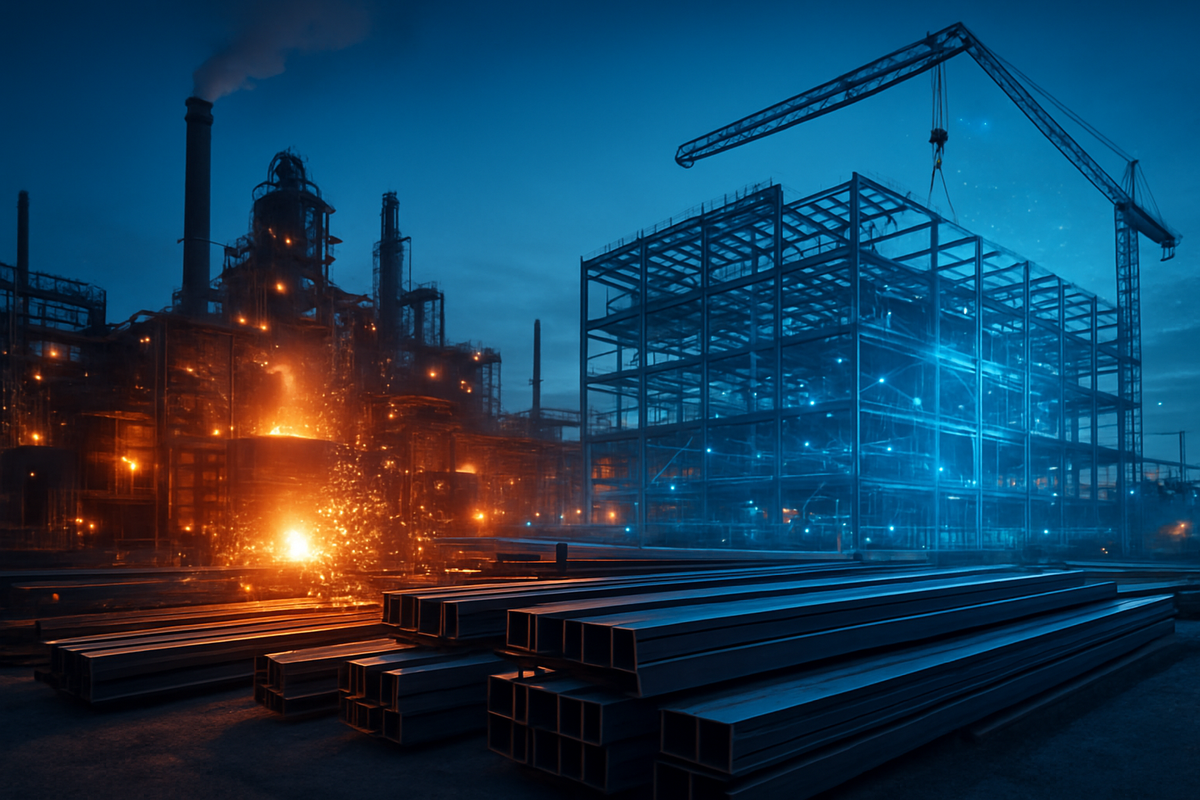
The broader significance of Steel Dynamics’ $2.73-$2.77 guidance lies in what it reveals about the changing nature of the American economy. We are witnessing a transition from a consumer-led growth model to one driven by "hard assets" and industrial capacity. The surge in data center construction is a prime example of this shift. Modern hyperscale data centers are no longer just "warehouses for servers"; they are massive industrial complexes requiring upwards of 20,000 tons of steel for structural support, server racks, and advanced cooling systems.
This event fits into a wider industry trend of "onshoring"—the return of manufacturing to U.S. soil. As geopolitical tensions remain a concern, companies are increasingly prioritizing domestic supply chains. This has created a "floor" for steel demand that didn't exist a decade ago. Historically, the steel industry was notoriously cyclical and prone to deep troughs, as evidenced by the $1.44 EPS seen in early 2025. However, the current backlog stretching into the third quarter of 2026 suggests that the traditional "boom-bust" cycle may be leveling out in favor of a more sustained period of growth driven by non-discretionary federal and tech-sector spending.
Regulatory policies are also playing a role. The continued enforcement of "Buy America" provisions for federally funded projects ensures that companies like Steel Dynamics remain the first choice for major projects such as the Brent Spence Bridge Corridor and the I-5 bridge replacement. These aren't just one-off events; they are part of a decade-long infrastructure renewal cycle that is just now reaching its peak intensity.
Looking ahead, the short-term focus for investors will be the full first-quarter earnings release scheduled for April 20, 2026. This call will likely provide more granular detail on the company’s "green steel" initiatives and the progress of its new aluminum flat-rolled mill. Strategically, Steel Dynamics may look to further integrate its recycling operations to insulate itself from the volatility of the global scrap market, which remains a primary variable in their cost structure.
In the long term, the sustainability of the data center boom remains the "X-factor." If the AI build-out continues at its current pace, the demand for structural steel will likely outstrip domestic production capacity, potentially leading to further price increases. However, a potential challenge could emerge if the Federal Reserve maintains a high-interest-rate environment longer than expected, which could eventually sap the momentum of private-sector commercial real estate development. For now, the "hybrid" demand model—half public infrastructure, half private tech infrastructure—appears to be a winning formula.
The takeaway from Steel Dynamics’ latest guidance is clear: the steel industry is no longer a relic of the "old economy." It is the foundational backbone of the new digital and industrial era. By nearly doubling its earnings per share year-over-year, STLD has demonstrated that it is uniquely positioned to capitalize on the most significant structural shifts in the U.S. economy—onshoring, infrastructure renewal, and the AI revolution.
As we move forward into 2026, the market will be watching for any signs of cooling in the data center space or shifts in federal spending priorities. However, with a massive backlog and expanding margins, Steel Dynamics is entering the second quarter with significant wind at its back. Investors should keep a close eye on scrap metal pricing and the upcoming April 20th earnings call for confirmation that this "super-cycle" in steel has more room to run.
This content is intended for informational purposes only and is not financial advice.