GREELEY, CO — The American dinner table is facing its most significant protein disruption in decades as a high-stakes labor standoff at the nation’s premier processing hub collides with a historic cattle shortage. As of March 19, 2026, the beef supply chain has entered a state of "structural upheaval," following a total walkout at the JBS S.A. (OTC: JBSAY) flagship facility in Greeley, Colorado. The work stoppage, now entering its fourth day, has effectively frozen nearly 7% of the United States’ daily beef slaughter capacity, sending shockwaves through a market already reeling from record-low herd numbers and skyrocketing energy costs.
The immediate implications are stark: with the Greeley plant processing upwards of 6,000 head of cattle per day, the sudden removal of these "hooks" is causing a localized glut of unmarketable livestock in the Mountain West, even as retail prices for ground beef across the country surge toward an unprecedented $8.00 per pound. For the broader financial markets, the strike represents a "perfect storm" of logistical failure and inflationary pressure, threatening to prolong a "Beef Super-Cycle" that has already seen consumer prices outpace general inflation for eighteen consecutive months.
A Four-Day Standoff in the High Plains
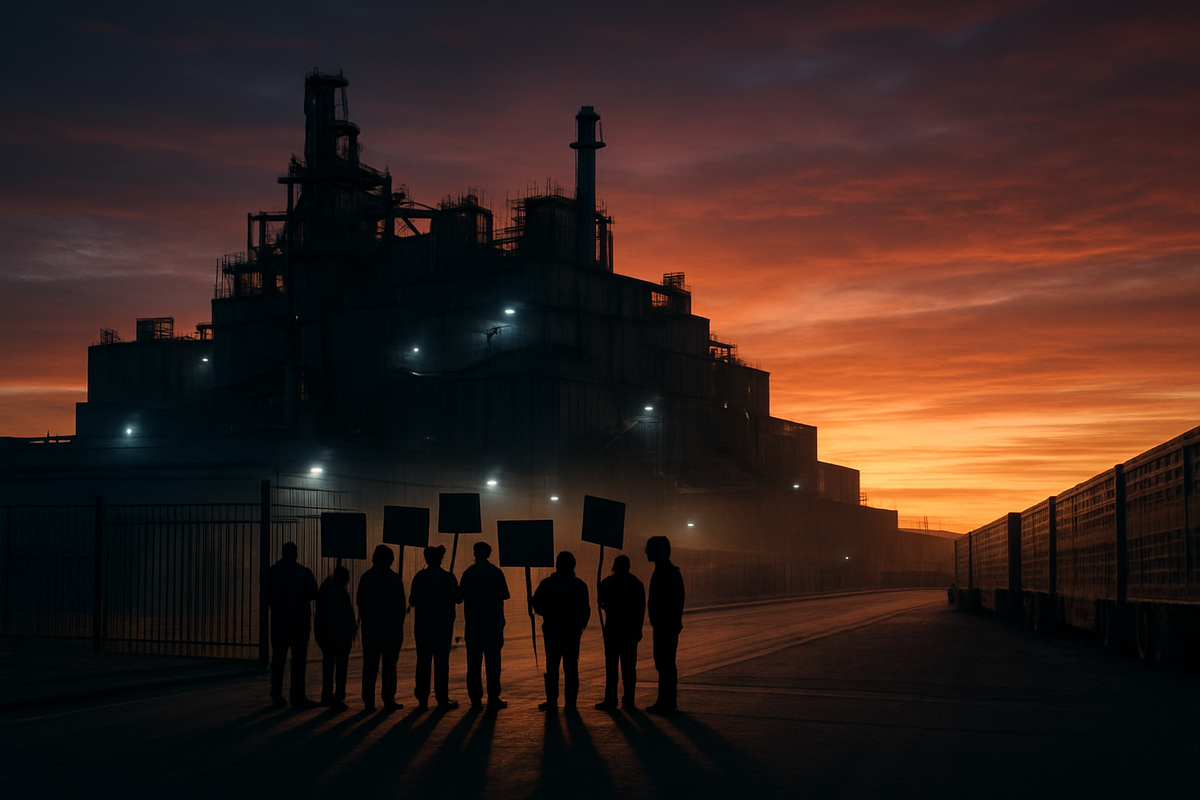
The crisis began at 5:30 a.m. on Monday, March 16, 2026, when approximately 3,800 workers represented by the United Food and Commercial Workers (UFCW) Local 7 walked off the job at the Swift Beef plant in Greeley. The strike followed months of increasingly acrimonious negotiations over a contract that union leadership characterized as "draconian" in the face of 2025’s persistent food and housing inflation. While JBS S.A. (OTC: JBSAY) offered 2% annual raises, workers pointed to the company’s practice of charging employees for mandatory personal protective equipment (PPE)—costs that can exceed $1,100 annually—and unsafe line speeds reaching 420 animals per hour as breaking points.
The timing of the strike could not be worse for the industry. It follows the permanent closure of a major Tyson Foods, Inc. (NYSE: TSN) plant in Lexington, Nebraska, in January, and significant shift reductions at National Beef facilities owned by Marfrig Global Foods S.A. (OTC: MRRTY). These cumulative losses in processing capacity have created a logistical bottleneck; while JBS is attempting to reroute cattle to other facilities, the sheer volume of the Greeley operation makes a seamless transition impossible. Analysts note that transporting thousands of animals to distant plants in Texas or Kansas adds significant "shrinkage"—weight loss due to stress and dehydration—and massive freight surcharges at a time when diesel prices are hitting multi-year highs.
The initial market reaction has been one of extreme volatility. In the hours following the strike's commencement, Chicago Mercantile Exchange (CME) live cattle futures spiked as traders priced in a near-term shortage of wholesale beef. However, by mid-week, those gains were tempered by fears of "demand destruction" at the grocery store, as the USDA reported that the average price for Choice-grade beef cuts had jumped 4% in just 72 hours.
Winners and Losers in a Margin-Squeezed Market
The financial fallout from the Greeley strike is being felt most acutely by the "Big Four" meatpackers. JBS S.A. (OTC: JBSAY) has already seen its stock technicals turn bearish this month, with its 10-day moving average breaking below the 50-day support line as it reports a $293 million operating loss in its North American beef division. The strike effectively silences their most efficient profit engine, forcing the company to eat the overhead of a massive, idle facility while losing market share to competitors.
Tyson Foods, Inc. (NYSE: TSN) is also struggling to capitalize on its rival’s misfortune. Despite the potential to pick up JBS’s slack, Tyson recently reported a staggering $319 million operating loss in its beef segment for the first quarter of 2026. The issue is not a lack of demand, but the "Protein Paradox": the record-high price of purchasing "feeder cattle" from ranchers has completely eroded the packer's margins. Marfrig Global Foods S.A. (OTC: MRRTY) is facing similar headwinds, with its North American margins thinning to a precarious 3.6%. For these giants, the strike is an expensive distraction during a period of necessary "facility rationalization."
On the other side of the ledger, retailers and fast-food chains are the clear losers. Companies like McDonald's Corp (NYSE: MCD) and retail giants like Walmart Inc. (NYSE: WMT) are now forced to decide between absorbing the rapidly rising cost of wholesale beef or passing it on to a consumer base that is already trading down to poultry and pork. The only peripheral "winners" may be the poultry producers, as consumers flee the $15.00-per-pound steak for more affordable proteins, potentially boosting the outlook for diversified firms like Hormel Foods Corp (NYSE: HRL).
The Structural Roots of the Crisis
To understand the severity of the current crisis, one must look at the broader industry trends that have left the supply chain so brittle. The U.S. beef herd currently stands at 86.2 million head—the smallest population since 1951. This 75-year low is the result of years of drought in the Southern Plains followed by high interest rates that made herd rebuilding prohibitively expensive for independent ranchers. This scarcity is now being compounded by a parasitic screwworm outbreak in Mexico, which led to the closure of the southern border to feeder cattle in late 2025, removing 1.2 million head from the 2026 supply pipeline.
Furthermore, the "Protein Paradox" has been exacerbated by a geopolitical energy shock. With Brent crude surging toward $150 per barrel following conflicts in the Strait of Hormuz, the cost of transporting cattle and finished beef has skyrocketed. While corn prices are relatively low due to a 2025 bumper crop, the savings are being completely offset by the $5.07-per-gallon cost of on-highway diesel. Historically, a strike at a major plant like Greeley might be a temporary blip, but in 2026, it acts as a catalyst for a system already pushed to its absolute limits. Regulatory scrutiny is also mounting; the Department of Justice recently launched a fresh antitrust probe into the Big Four for alleged price-fixing, following a multi-million dollar settlement earlier this year.
The Path Forward: Scenarios and Strategic Pivots
In the short term, the market is bracing for the possibility of government intervention. Rumors are circulating in Washington that the current administration may invoke the Defense Production Act to end the JBS strike, citing national food security concerns. Such a move would be controversial but could provide the "hooks" necessary to keep cattle moving. Additionally, the government has already quadrupled the Argentine beef import quota to 80,000 metric tons to flood the market with cheaper lean beef for grinding, a move intended to cap the rise in ground beef prices.
Longer term, the industry must adapt to a "low-volume, high-cost" environment. We are likely to see a continued pivot toward automation in processing plants to reduce reliance on a volatile labor market, though the capital expenditure required for such upgrades is difficult to justify given current operating losses. Feedlots may also begin to demand more transparency in pricing as they navigate the disconnect between low corn prices and high energy costs. If the JBS strike extends beyond the two-week mark, we could see a permanent shift in consumer habits, as "beef inflation" becomes a structural part of the American economy rather than a cyclical anomaly.
Closing the Chapter on Cheap Beef
The events of March 19, 2026, mark a definitive end to the era of inexpensive, abundant beef in the United States. The JBS strike in Greeley is not just a labor dispute; it is a symptom of a supply chain that has been stripped of its redundancies and is now fracturing under the combined weight of environmental, geopolitical, and economic pressures. For investors, the takeaway is clear: the beef industry is in the midst of a painful consolidation, and the path to profitability will be narrow and fraught with regulatory hurdles.
Moving forward, the market will be watching the "rebuilding" phase of the cattle cycle, which analysts project won't meaningfully begin until 2027 or 2028. Until then, volatility will remain the rule. Investors should keep a close eye on diesel price trends and the progress of the DOJ's antitrust investigations. As the "Big Four" meatpackers continue to navigate negative margins, the resilience of the American consumer’s appetite for beef will be the ultimate arbiter of the market’s future.
This content is intended for informational purposes only and is not financial advice.