As the sun rises on March 3, 2026, the global financial community is fixated on a singular transition of power: the pending handover of the Federal Reserve chairmanship from Jerome Powell to Kevin Warsh. Nominated by President Trump on January 30, Warsh represents a seismic shift in the central bank’s philosophy, moving away from the crisis-era interventions of the last decade toward what some analysts are calling a "Sound Money" doctrine. This transition arrives at a moment of peak political friction, as the sitting Chair, Jerome Powell, operates under the shadow of a Department of Justice investigation, creating a leadership vacuum that is rippling through the bond and equity markets.
The immediate implications are stark. Investors are grappling with a "Warsh Shock" that has sent gold and silver prices into a tailspin while revitalizing the U.S. dollar. With the next Federal Open Market Committee (FOMC) meeting scheduled for March 18, the market is bracing for a "holding pattern" session where Powell’s influence may be at its lowest ebb. While the Fed is widely expected to maintain interest rates at their current 3.50% to 3.75% range, the focus has shifted entirely to how Warsh’s "cyclically dovish but structurally hawkish" stance will redefine the 2026 rate path and the Fed's massive $6.5 trillion balance sheet.
The Nomination and the Shadow of the DOJ
President Trump’s selection of Kevin Warsh, a former Fed Governor and Wall Street veteran, over other finalists like Kevin Hassett and Christopher Waller, marks a return to a more traditionalist, though potentially disruptive, monetary approach. Warsh’s reputation as a "pivoting hawk"—historically critical of quantitative easing but currently supportive of Trump’s growth-oriented low-rate desires—has kept markets on edge. The timeline leading to this moment has been fraught with tension; after months of public criticism from the White House, the nomination of Warsh in late January was intended to provide clarity. However, the process has been complicated by Senator Thom Tillis (R-NC), who has placed a legislative hold on all Fed nominations until the DOJ concludes its probe into Powell’s past congressional testimony.
The stakeholders involved in this transition extend far beyond the Eccles Building. On one side, the Trump administration seeks a Fed that will facilitate aggressive deregulation and domestic growth. On the other, institutionalists fear the erosion of central bank independence. Jerome Powell, whose term expires on May 15, 2026, has largely been sidelined as a "lame duck" leader. The internal dynamics of the FOMC are also shifting, with figures like Vice Chair Michelle Bowman (who was also on the shortlist) advocating for a continued hawkish focus on inflation, while Governor Waller leans toward more immediate rate cuts to reach a "neutral" level.
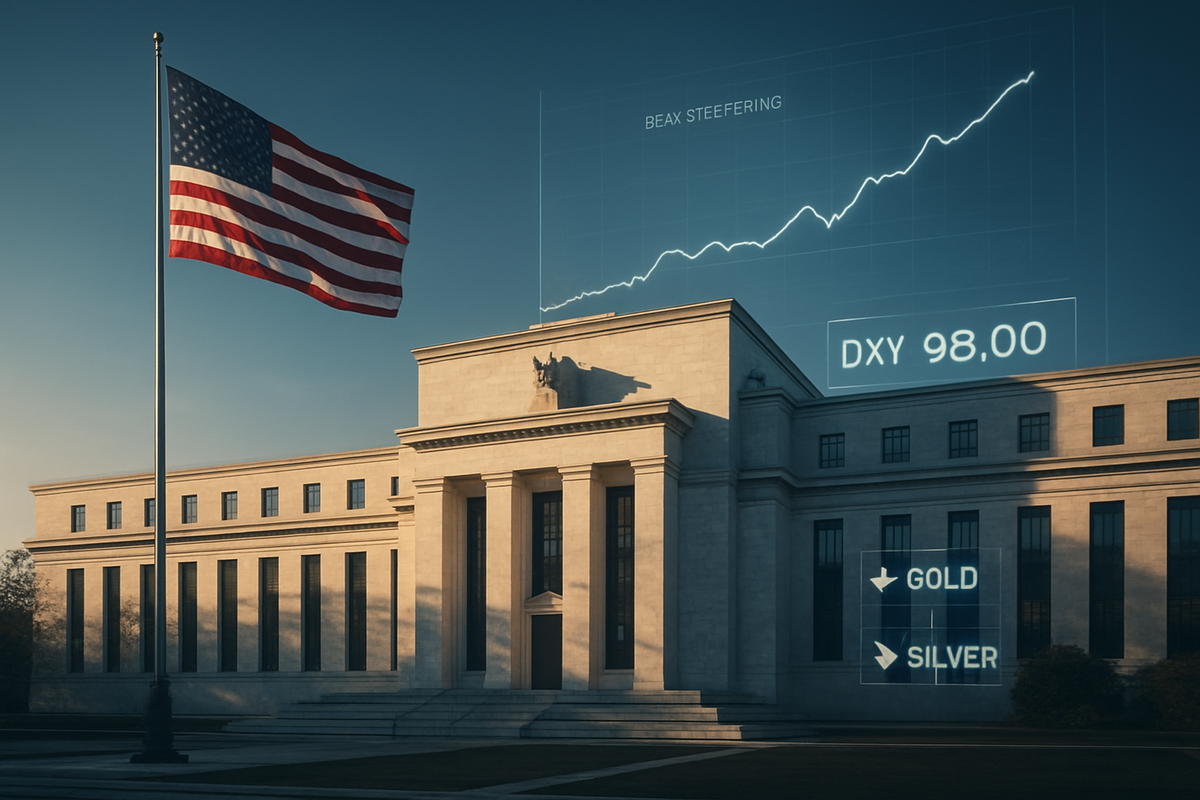
Initial market reactions have been a study in volatility. Since the nomination, the "bear steepening" of the yield curve has accelerated. Long-term Treasury yields have surged as traders price in Warsh’s stated intent to actively sell off the Fed’s mortgage-backed securities (MBS). Meanwhile, the U.S. Dollar Index (DXY) has climbed back toward the 98.00 level, reflecting a renewed confidence in the dollar's strength under a Warsh-led Fed.
Winners and Losers in the New Regime
The pivot toward Kevin Warsh’s "Sound Money" policy creates a distinct set of winners and losers across the corporate landscape. Large-cap financial institutions like J.P. Morgan Chase & Co. (NYSE: JPM) and Goldman Sachs Group, Inc. (NYSE: GS) are positioned to benefit from the steepening yield curve. A wider spread between short-term and long-term rates typically bolsters net interest margins, while Warsh’s perceived friendliness toward deregulation could lower compliance costs. Furthermore, BlackRock, Inc. (NYSE: BLK) stands to see increased activity in fixed-income markets as the Fed begins a more aggressive unwinding of its balance sheet.
Conversely, the "Warsh Shock" has been a headwind for growth-sensitive sectors. Technology giants like Apple Inc. (NASDAQ: AAPL) and Microsoft Corporation (NASDAQ: MSFT), which trade on high multiples of future earnings, are sensitive to the rising long-term yields that have accompanied the nomination. Higher discount rates reduce the present value of future cash flows, leading to a cooling of the tech rally that dominated 2025. Additionally, the real estate sector, represented by major players like Digital Realty Trust, Inc. (NYSE: DLR), faces the prospect of higher long-term financing costs if the Fed begins active sales of its MBS portfolio.
The commodities market has perhaps been the biggest "loser" in the immediate term. Gold and silver, which flourished during periods of high inflation and monetary expansion, have seen double-digit percentage drops. Investors who held these assets as a hedge against currency debasement are now fleeing to the safety of a strengthening dollar, betting that Warsh will prioritize the Fed’s institutional integrity and price stability over further liquidity injections.
A Broader Significance: The End of an Era
This transition represents more than just a change in personnel; it is a potential end to the "Fed Put"—the long-held belief that the central bank would always intervene to support markets during downturns. By signaling a move toward active balance sheet reduction, Warsh is challenging the post-2008 consensus of permanent intervention. This shift fits into a broader global trend of central banks, including the European Central Bank and the Bank of Japan, attempting to normalize policy after years of extraordinary measures, albeit with varying degrees of success.
The regulatory implications are equally significant. A Warsh-led Fed is expected to reconsider the "Basel III Endgame" capital requirements, which have been a point of contention between the banking industry and current Fed leadership. Such a move would align the Fed more closely with the Trump administration’s fiscal policies, potentially leading to a more coordinated—but politically fraught—approach to economic management. Historically, this level of executive influence on the Fed has been rare, drawing comparisons to the Nixon-era pressures on Arthur Burns, a precedent that haunts many institutional economists.
Ripple effects are also being felt among international partners. A stronger dollar and rising U.S. yields are putting pressure on emerging market currencies and forcing foreign central banks to maintain higher rates to prevent capital flight. This "America First" monetary policy could lead to increased trade tensions, as a stronger dollar makes U.S. exports more expensive while simultaneously attracting global capital away from other markets.
The Road to May 15: What Comes Next
As we approach the March 18 FOMC meeting, the short-term outlook is one of calculated waiting. With a 97% probability of a rate hold, the meeting itself may be less about policy and more about the rhetoric in the Summary of Economic Projections. Investors will be looking for any signs of "Warsh-proofing" in the Fed’s dot plot—attempts by the current board to set a course that the incoming Chair cannot easily dismantle. However, the real drama will unfold in the Senate, where the confirmation process remains stalled.
Strategic pivots will be required for portfolio managers who have spent years betting on low rates and Fed support. The potential for a "leadership vacuum" if Powell departs before Warsh is confirmed is a "tail risk" that could spark significant volatility in May. If the Senate hold continues, the Fed may be forced into an interim leadership structure, a scenario that would test the resilience of the U.S. Treasury market.
In the long term, the market must adapt to a Fed that is less predictable and more focused on structural reforms. The active sale of the Fed's $6.5 trillion balance sheet is an untested frontier; while the theory suggests it will curb inflation, the practical effect on liquidity and credit markets remains a major unknown. Market participants should prepare for a period of "price discovery" where assets are valued more on fundamentals and less on the promise of central bank liquidity.
Conclusion and Investor Outlook
The transition from Powell to Warsh is the most consequential shift in U.S. monetary policy in over a decade. It marks a move toward a more disciplined, "sound money" framework that seeks to balance short-term growth with long-term structural health. Key takeaways for investors include the renewed strength of the U.S. dollar, the benefits of a steeper yield curve for the banking sector, and the cooling effect of rising yields on high-growth tech valuations.
Moving forward, the market is likely to remain in a state of high-alert volatility. The March 18 FOMC meeting will serve as a final barometer of the Powell era, but the true direction of the economy will be determined by the confirmation battle in Washington and Warsh's eventual assumption of the Chair. Investors should watch the yield curve and the CPI data closely; any spike in inflation during this transition could force Warsh’s hand into a more hawkish stance than the administration might prefer.
Ultimately, the significance of this event lies in the redefinition of the Fed's role in the 21st-century economy. As the "Sound Money" doctrine takes hold, the era of easy money appears to be receding into the rearview mirror. Whether this leads to a more stable financial system or a period of painful adjustment remains the defining question for the markets in 2026.
This content is intended for informational purposes only and is not financial advice.